Maria Montessori
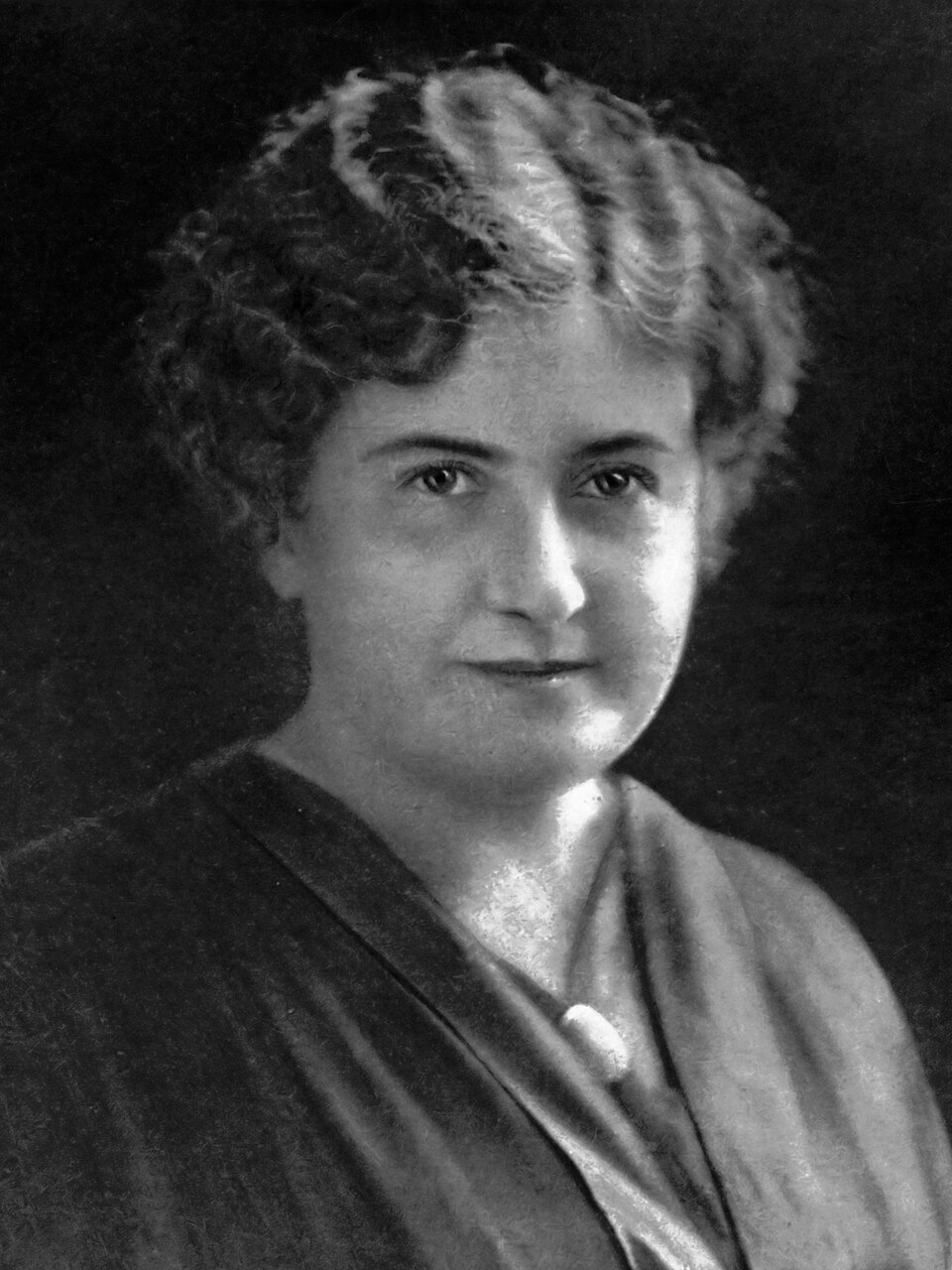
What failed
She went to a boys' technical school from 1883 meaning to become an engineer, changed her mind, and when she asked about medicine at Rome she was strongly discouraged by Guido Baccelli, the professor of clinical medicine. She reached the medical faculty in 1892 or 1893 — sources differ — by the detour of a natural sciences diploma, entering with advanced standing as a third-year student. She was met with hostility and harassment from students and professors, and because attending a dissection alongside men in the presence of a naked body was thought improper she did her cadaver work alone, after hours. Her son Mario was born on 31 March 1898 and registered as Mario Pipilli, born of unknown parents; she placed him with a wet nurse in the countryside and did not take him to live with her until 1913, when he was fifteen, and even then she presented him publicly as an adopted son or a nephew. In 1901 the relationship with Giuseppe Montesano ended and she left the National League, the Orthophrenic School and her private practice. The American movement was already splintering when she went to California in 1915, and the academic elite there increasingly criticised her model. A new military dictatorship in Spain closed her model school in Barcelona in 1924; in 1932 she and Mario were placed under political surveillance by the Italian authorities; she withdrew from the Opera Montessori in January 1933 and left Italy in 1934; and by 1936 the Opera Nazionale Montessori had been shut down and Montessori education in Italy left unsupported, though not officially banned.
What happened next
She kept moving: Barcelona until the Spanish Civil War drove her out in 1936, then England, then the Netherlands, then India in 1939, where the war stranded her — after Italy entered the war in 1940 Mario was interned as an enemy alien while she was confined to the Theosophical Society compound at Madras, until he was returned to her two months later. The method spread anyway, through Britain, the Netherlands, India and eventually back into the United States. She returned to Italy in 1947 to re-establish the Opera Nazionale Montessori and gave two more training courses, though she kept her main residence in Amsterdam, and between 1949 and 1951 she was nominated six times for the Nobel Peace Prize. She died at Noordwijk aan Zee on 6 May 1952.
The point
The obstacles were not tests she passed. They were conditions she worked under and paid for: she kept her own son at a distance for fifteen years to hold on to a career the same conventions would have taken from her had she married. The three bodies that backed her ended three different ways. She walked out of the National League herself, after the personal break with Montesano. The Catalan government withdrew official support from her programmes after she would not declare for Catalan independence. And the fascist regime whose patronage she had accepted for a decade, and whose leader she had invited to preside over the Opera Nazionale Montessori, put her under surveillance and ended Montessori activity in Italy. For most of the 1930s she was being celebrated abroad and shut down at home, at the same time.
The sequence
13 documented failures, shown with the successes in between. Every entry carries its own source — the wins are part of the record, and leaving them out is how these stories get distorted.
- 1883
Enters the technical school Michelangelo Buonarroti at thirteen, intending to become an engineer.
- 1890
Strongly discouraged from medicine by Guido Baccelli, the professor of clinical medicine at Rome. She enrols in natural sciences instead and takes the diploma in 1892.
- 1892-1893
She reaches the medical faculty by the detour of the natural sciences diploma. The sources disagree on when: Treccani dates the move to 1892, Wikipedia dates the entrance to 1893.
- 1893
In the medical programme she is met with hostility and harassment from students and professors.
- 1893-1896
Required to dissect cadavers alone, after hours, because attending with men in the presence of a naked body is judged improper.
- 1896
Graduates in medicine at Rome in July, with a thesis on hallucinations of antagonistic content researched in the university psychiatric clinic.
- 1896
She is widely called the first woman in Italy to take a medical degree. She was not: Ernestina Paper took a medical degree at Florence in 1877, the first woman to graduate in the Kingdom of Italy. Treccani claims only that Montessori was one of the very first Italian women to qualify.
- 1896
Represents Italy at the international women's congress in Berlin.
- 1898
Her son Mario is born on 31 March, in secret, of the relationship with Montesano.
- 1898
He is registered as Mario Pipilli, born of unknown parents, and placed with a wet nurse in the countryside.
- 1900
The National League opens the Scuola Magistrale Ortofrenica in Rome, a medico-pedagogical institute for training teachers of children with learning difficulties, with an attached laboratory classroom.
- 1901
The final break with Giuseppe Montesano. She leaves the National League and the Orthophrenic School.
- 1901
She gives up her private practice in the same year.
- 1907
The first Casa dei Bambini opens on 6 January in the San Lorenzo district of Rome, with fifty or sixty children.
- 1913
Takes Mario, now fifteen, to live with her, without revealing his identity publicly and presenting him as an adopted son or a nephew.
- 1915
She arrives in California with the American movement already splintering and the academic elite increasingly critical of her model.
- 1915
The same study finds the eight months in California helped the movement grow.
- 1924
A new military dictatorship in Spain closes her model school in Barcelona and Montessori education declines there. Barcelona stays her home for another twelve years.
- 1924-1933
Through the decade of fascist patronage she invites Mussolini to preside over the Opera Nazionale Montessori and argues that her method suits the regime's aims.
- 1926
The sources disagree on what office Mussolini held. Wikipedia says he was made honorary president of the Opera Montessori by this year; Treccani says Giovanni Gentile was president and Montessori herself the honorary president, with Mussolini heading the committee of honour of the 1926 Milan course.
- 1929
The Association Montessori Internationale is founded, with its seat in Rome and with Freud, Piaget and Tagore among its public backers.
- 1932
She and Mario are placed under political surveillance.
- 1933
She and Mario withdraw from the Opera Montessori in January. Bodrero withdraws as well.
- 1934
Montessori and her son leave Italy for Spain.
- 1936
The Opera Nazionale Montessori is shut down and the method goes unsupported in Italy, though it is not officially banned.
- 1947
She returns to Italy to re-establish the Opera Nazionale Montessori and gives two more training courses, keeping her main residence in Amsterdam.
- 1949-1951
Six nominations for the Nobel Peace Prize across three years, four of them in 1949. She did not win.
Sources
- MONTESSORI, Maria (Dizionario Biografico degli Italiani, Treccani)
Successivamente, coltivando il progetto di diventare ingegnere, dal 1883 studiò alla scuola tecnica Michelangelo Buonarroti e poi, dal 1886 al 1890, all'Istituto tecnico Leonardo da Vinci.
- Maria Montessori (Wikipedia)
She appealed to Guido Baccelli, the professor of clinical medicine at the University of Rome but was strongly discouraged. In 1890, she enrolled in the University of Rome in a degree course in natural sciences, passing examinations in botany, zoology, experimental physics, histology, anatomy, and general and organic chemistry, and earning her diploma di licenza in 1892.
- Maria Montessori (Wikipedia) — the birth registration
The name in the child's birth registration was Mario Pipilli, born of unknown parents. … She was forced to place her son in the care of a wet nurse living in the countryside, distraught to miss the first few years of his life.
- Maria Montessori (Wikipedia) — leaving the school and the practice
In 1901, Montessori left the Orthophrenic School and her private practice
- Maria Montessori (Stanford Encyclopedia of Philosophy)
Montessori reciprocated by inviting him to be, for example, President of the Opera Nazionale Montessori and offering that, as Quarfood puts it, 'her character-building method is entirely in line with the regime's intentions to improve the population's morale' (Quarfood 2022: 176).
- From exceptional to common presence: Italian women in twentieth-century life sciences (History and Philosophy of the Life Sciences, 2022)
The first female graduate of the Kingdom of Italy, the Russian Ernestina Paper (1846–1926), obtained her medical degree in Florence in 1877.
- Maria Montessori — Nomination Archive (The Nobel Prize)
Nominee in 6 nominations: Peace 1949 by Maria Jervolino Peace 1949 by Viscount Lambert Peace 1949 by Helena Stellwag Peace 1949 by M Langved Peace 1950 by Maria Jervolino Peace 1951 by Maria Jervolino
Use the ← and → keys to move between entries.
Related failures
Others in science & medicine, and nearby.
Katalin Karikó
Biochemistry
Demoted, defunded, pushed out after 24 years. Kept running the experiment.
3 documented failures
Peter Higgs
Theoretical physics
The paper was rejected. Revising it is where the boson came from.
1 documented failure
Albert Einstein
Theoretical physics
He could not get an academic job for two years, and wrote the papers that changed physics as a patent clerk.
8 documented failures
Barry Marshall
Medicine
Nobody believed ulcers were an infection, so he drank the bacteria himself.
4 documented failures