Origin
How it started
The pledge began as a stack of note cards and a room full of people who were afraid to start.
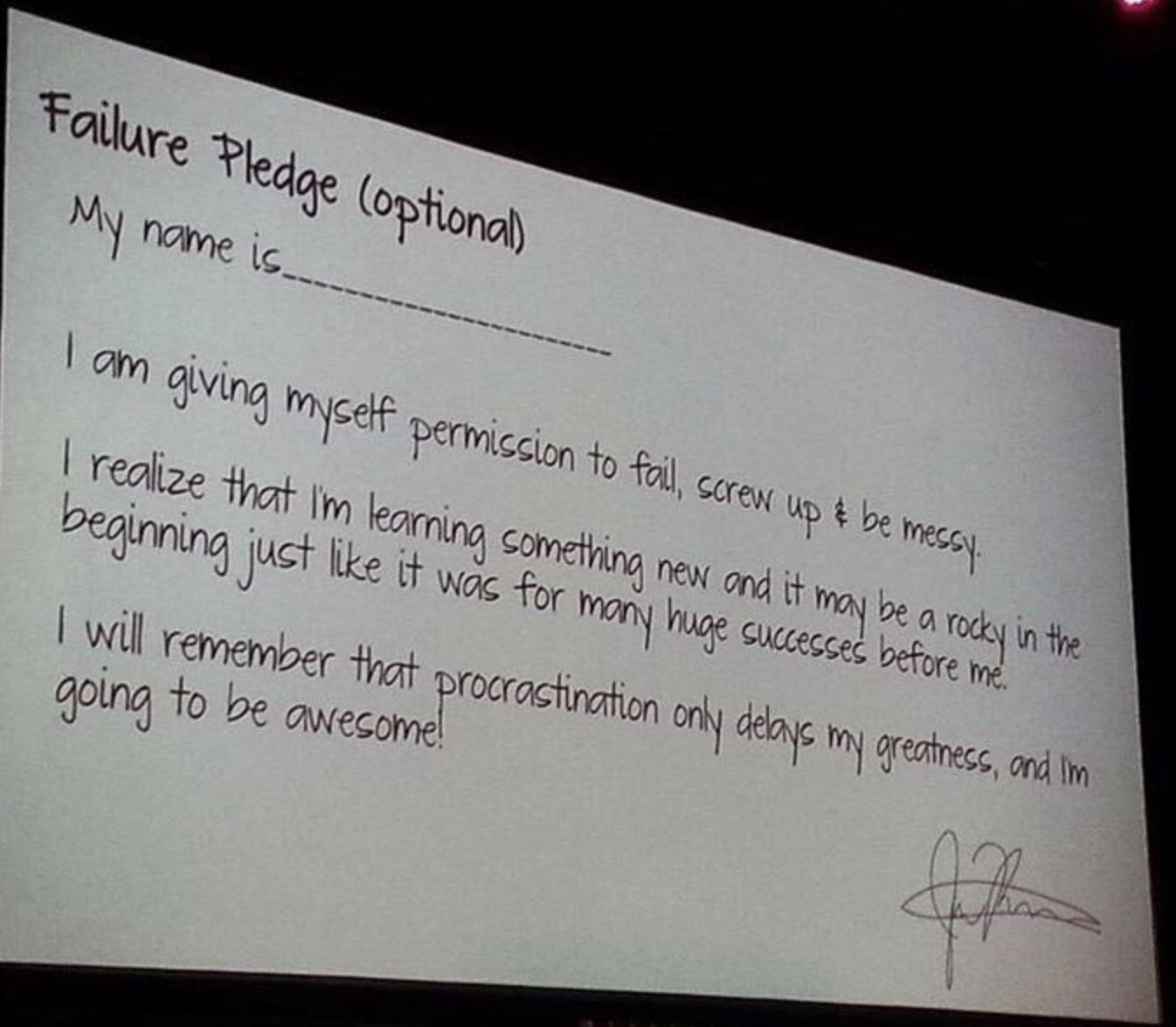
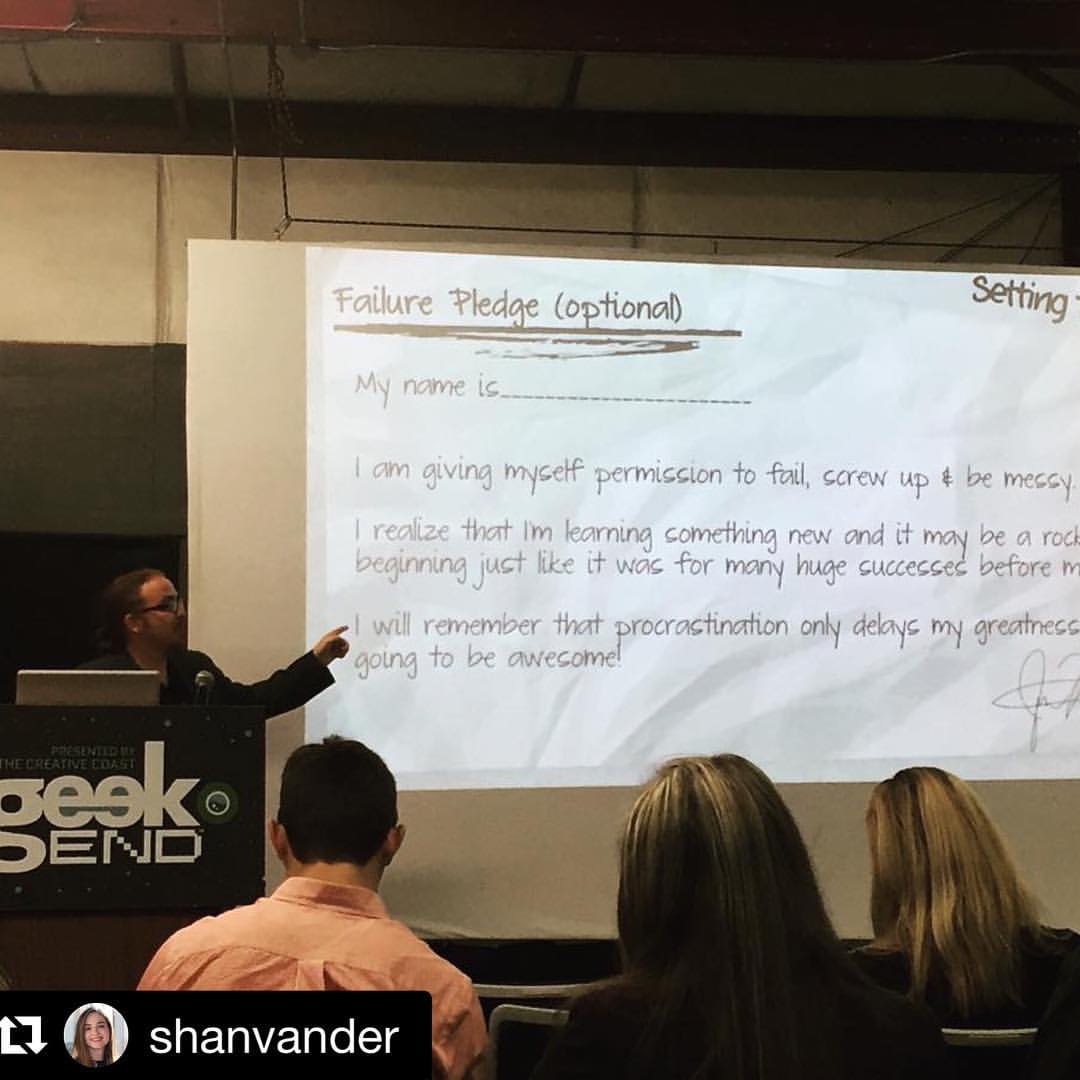
I ran this as an exercise in my classrooms and in public tech talks. It was never a product. I would put the pledge up on screen, hand out note cards, and ask everyone to write it out by hand and sign it.
The reason was simple enough. Over and over I watched capable people freeze — not because the work was beyond them, but because they were afraid of getting it wrong. They would analyse and plan and read and prepare, and never begin. And the thing about not beginning is that it settles the question. You cannot get good at something you never start. The fear of failing produces the outcome it was trying to avoid.
What I found, for myself as much as for anyone else, was that granting the permission explicitly changed something. Writing it down in your own handwriting and putting your name to it is different from believing it vaguely. It is a small, deliberate act, and it unsticks people.
Iteration and practice are the only routes to competence. If fear keeps you out of the loop entirely, the result is already decided. The pledge is a way of stepping into the loop.
This site is the same exercise, in a form you can print, sign, and hang where you will see it on the days you need it.