Bruce Lee
What failed
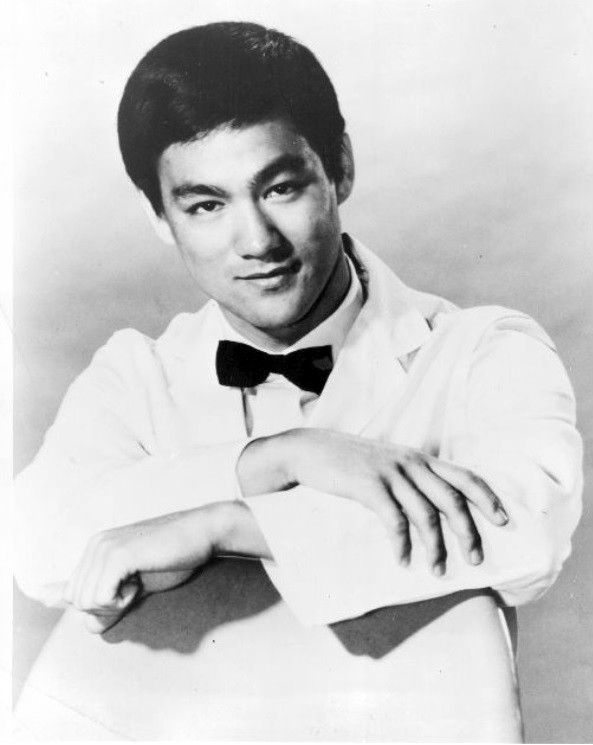
He dropped out of the University of Washington in early 1964. A screen test for the producer William Dozier in February 1965, for a proposed series called Number One Son about the son of Charlie Chan, led nowhere - the show was never made. The Green Hornet gave him Kato and ran one season of twenty-six episodes, September 1966 to March 1967; with the series over he taught for a living at the Jun Fan Gung Fu Institute he had opened in Chinatown, Los Angeles. The Silent Flute, a script he wrote in 1969 with Stirling Silliphant and James Coburn, was not made. He injured his lower back in August 1970 and spent months in bed - three of them flat, by Matthew Polly's account - and was told by doctors that he would never practise martial arts again. In 1971 he auditioned for Kwai Chang Caine in Kung Fu and was passed over; the studio was reluctant to hire a Chinese actor, had concerns about his accent, and thought his intense personality unsuited to a quiet, serene character. That December, two months after The Big Boss had opened in Hong Kong, he told Pierre Berton that his own series, The Warrior, was probably not going to be on.
What happened next
He signed with Golden Harvest and The Big Boss opened in Hong Kong in late October 1971, an enormous box-office success that made him a star across Asia. He never signed Ted Ashley's development deal at Warner Bros.: he waited to see how The Big Boss performed, and when it was a hit he dropped his television plans for the cinema. Fist of Fury broke The Big Boss's records in 1972, and he wrote, directed and starred in The Way of the Dragon the same year. Warner Bros. offered him Enter the Dragon in November 1972; he died on 20 July 1973 aged thirty-two, and the film premiered in Hong Kong six days later and in Los Angeles on 19 August. His own treatment was produced as Warrior on Cinemax in 2019, forty-eight years after he wrote it.
The point
The record does not show a long shut-out followed by a breakthrough. It shows work and no work in alternation for a decade: a series that lasted one season, a screen test that led nowhere, a script never shot, a part given to another actor, months in bed. What finally worked was in a different country and a different industry. Enter the Dragon opened in Los Angeles on 19 August 1973, a month after he died, and the series he had outlined in 1971 reached American television on 5 April 2019, nearly forty-six years after his death.
The sequence
8 documented failures, shown with the successes in between. Every entry carries its own source — the wins are part of the record, and leaving them out is how these stories get distorted.
- 1950
Aged nine, he co-stars with his father in The Kid, his first leading role; by eighteen he has appeared in twenty films.
- 1964
He drops out of the University of Washington in his third year and moves to Oakland.
- 1965
His 1964 Long Beach demonstration brings a screen test for the producer William Dozier in February, for a series about the son of Charlie Chan; the show never materialises.
- 1966
He is cast as Kato in The Green Hornet, his first continuing American role.
- 1967
The Green Hornet ends after one season of twenty-six episodes, September 1966 to March 1967.
- 1967
With the series over, he opens the Jun Fan Gung Fu Institute in Chinatown, Los Angeles, and teaches for a living.
- 1969
The Silent Flute, written with Stirling Silliphant and James Coburn, is not made; the script is filmed nine years later, without him, starring David Carradine.
- 1970
Warner Bros. executive Fred Weintraub receives the finished Kung Fu screenplay from Ed Spielman and Howard Friedlander on 30 April, more than a year before Lee is offered a development deal of his own.
- 1970
He injures his lower back in August and is bedridden for months; doctors tell him he will not practise martial arts again. The sources disagree on how long: the Hong Kong Heritage Museum says half a year in bed, Matthew Polly three months flat and three more confined to the house.
- 1971
He auditions for Kwai Chang Caine in Kung Fu and is passed over; the studio is reluctant to hire a Chinese actor, has concerns about his accent, and thinks his intense personality unsuited to a quiet, serene character. David Carradine takes the role at his second audition.
- 1971
In October, Warner Bros. executive Ted Ashley offers him an exclusive development deal; Lee submits a treatment called Ah Sahm, later retitled The Warrior, and does not sign it, preferring to see how The Big Boss performs.
- 1971
The Big Boss opens in Hong Kong, his first leading film role and an enormous box-office success across Asia.
- 1971
In a December television interview, two months after The Big Boss opened, Lee tells Pierre Berton that his own series is probably not going to be made.
- 1972
Fist of Fury breaks the box-office records set by The Big Boss; he then writes, directs and stars in The Way of the Dragon.
Sources
- Bruce Lee (Wikipedia)
Lee played his first leading role in The Big Boss (1971), which proved to be an enormous box-office success across Asia and catapulted him to instant stardom in Hong Kong.
- Kung Fu (1972 TV series) (Wikipedia)
Bruce Lee did not sign Ashley's deal, preferring to see how The Big Boss performed in theaters.
- A Man Beyond the Ordinary: Bruce Lee - Hong Kong Heritage Museum, 'Stillness'
He suffered a lower back injury in 1970 and was bedridden for half a year. His doctors said he would never be able to practise martial arts again.
- Bruce Lee Steals the Show in The Green Hornet (American Heritage Center, University of Wyoming)
Despite considerable interest in Bruce Lee, The Green Hornet aired only one season from 1966-1967. It never found a larger-than-niche audience.
- The Big Boss (Wikipedia)
Release date 23 October 1971 (Hong Kong)
- Warrior (TV series) (Wikipedia)
Warrior (Chinese: 戰士) is an American martial arts crime drama television series that premiered on April 5, 2019, on Cinemax.
Use the ← and → keys to move between entries.
Related failures
Others in film & television, and nearby.
John Cassavetes
Filmmaker
Scrapped his own first film after the audience walked out.
2 documented failures

Oprah Winfrey
Broadcaster
Not fired. Moved to reading early-morning headline cut-ins in the same building — which was worse.
2 documented failures
Sidney Poitier
Actor
Thrown out of his first audition by the collar. He came back and offered to be the janitor.
3 documented failures
Laurence Olivier
Stage actor
He developed stage fright at fifty-seven and kept walking on stage anyway, terrified, for years.
2 documented failures