Jesse Owens
What failed
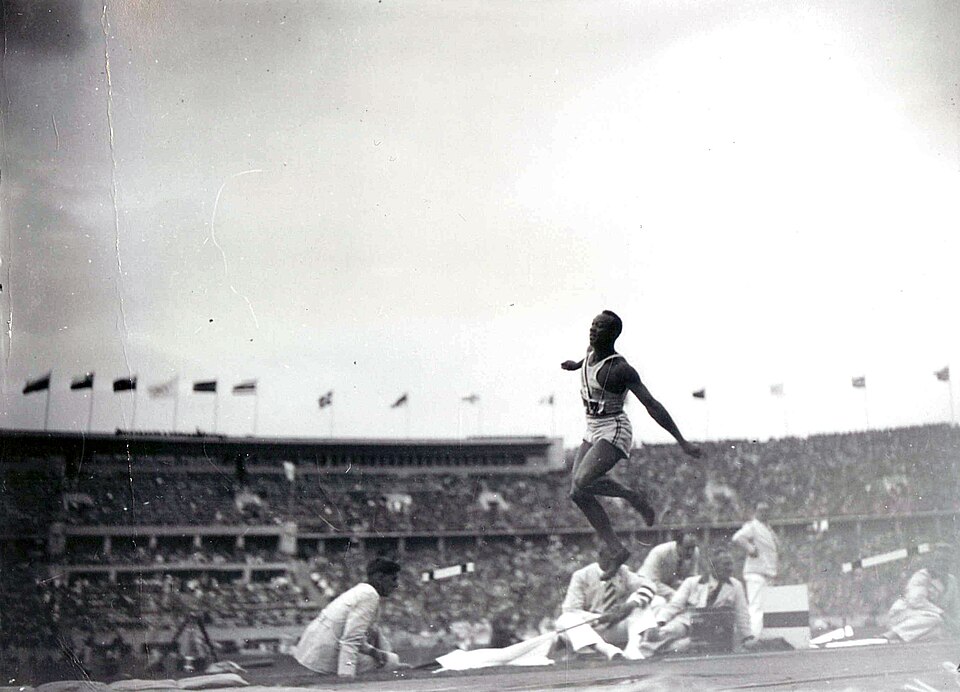
He won four gold medals in Berlin between 3 and 9 August 1936. On 16 August the Amateur Athletic Union suspended him for refusing the last leg of the European exhibition tour it had booked with the U.S. Olympic Committee, which ended his competitive career at twenty-two. The following month he had to take the freight lift to reach the reception held in his honour at the Waldorf-Astoria. That Christmas he raced a horse called Julio McCaw in Havana for money, and in the years after he worked as a petrol station attendant, a playground janitor and a dry-cleaning manager. He was forced into personal bankruptcy in 1939, and he left Ohio State in 1941 without a degree. Ford replaced him in a management reorganisation in 1945, and the sporting goods store he opened in Detroit that year failed. The West Coast Baseball Association, played as the West Coast Negro Baseball League, in which he was made vice-president in 1946, ran from May to July and folded. He lost his Illinois Youth Commission post in 1960 and was prosecuted for tax evasion in 1966.
What happened next
Eisenhower made him a goodwill ambassador in 1955 and sent him to India, the Philippines and Malaya, and the tours continued into the 1970s alongside endorsement work for Quaker Oats, Sears and Roebuck and Johnson & Johnson. The U.S. Olympic Committee put him on its board of directors in 1973, and the U.S. Track and Field Hall of Fame inducted him in 1974. On 5 August 1976 Gerald Ford gave him the Presidential Medal of Freedom at the White House, forty years after Roosevelt had not invited him there. He died of lung cancer in Tucson on 31 March 1980, aged sixty-six.
The point
The failure here came after the success rather than before it. He was the most famous athlete in the world for about a week in August 1936, was suspended from his sport in the same month, and then spent three decades going bankrupt, losing jobs and watching businesses fold, while the four medals stayed exactly what they were. The recognition that came in 1955 and again in 1976 arrived from administrations that had a use for him. The sport itself took until the 1970s.
The sequence
9 documented failures, shown with the successes in between. Every entry carries its own source — the wins are part of the record, and leaving them out is how these stories get distorted.
- 1935
At the Big Ten Championships in Ann Arbor on 25 May he set a run of world records inside 45 minutes, five days after badly injuring his back. Accounts differ on how many records the 45 minutes produced.
- 1935
Six weeks later, at the AAU Championships in Lincoln, Nebraska, Eulace Peacock beat him in both the 100m and the long jump.
- 1935-1936
Peacock kept beating him into the following season. World Athletics gives the run two ways on the same page: seven successive wins in all events by the 1936 indoor season, and six sprint wins over Owens.
- 1936
At the Berlin Olympics he won four gold medals.
- 1936
Seven days after his fourth gold, on 16 August, the Amateur Athletic Union suspended him for refusing the last leg of the European exhibition tour the AAU and the U.S. Olympic Committee had put on. He was twenty-two, and never competed as an amateur again.
- 1936
The sources disagree about why he walked away from the tour. The Baltimore Sun calls it a cash-grab tour he refused to finish; the International Olympic Committee says commercial offers waiting at home had turned his head.
- 1936
New York gave him a ticker-tape parade and a reception at the Waldorf-Astoria; he reached his own reception by the freight lift.
- 1936
Roosevelt invited neither Owens nor any other Black American medallist to the White House. The far better known story, that Hitler refused to shake his hand, is treated by the National Archives as a myth; Owens himself said he had been invited to shake hands with neither man. The PBS American Experience narration takes the other side and presents Hitler as refusing to greet him.
- 1936
At Christmas, four and a half months after Berlin, he went to Havana to race a horse called Julio McCaw for money.
- 1936
The race was handicapped. He was given a 40-yard start over 100 yards and won by inches.
- 1938-1939
He opened a dry-cleaning business in 1938 and was forced to file for personal bankruptcy in 1939.
- 1941
He left Ohio State without a degree.
- 1943
He joined the Ford Motor Company in Detroit as assistant personnel director for African American workers, later rising to personnel director.
- 1945
Ford replaced him in a management reorganisation, and the sporting goods store he opened in Detroit the same year failed.
- 1946
The West Coast Baseball Association, played as the West Coast Negro Baseball League, made him vice-president. It ran from May to July and folded; stadiums, umpires and publicity had never been arranged in advance.
- 1955
Eisenhower made him a goodwill ambassador and sent him to India, the Philippines and Malaya.
- 1960
When the Democrats took Illinois, he lost his seat on the Illinois Youth Commission, the patronage job he had held since 1953.
- 1966
He was successfully prosecuted for tax evasion.
- 1973
The U.S. Olympic Committee appointed him to its board of directors, thirty-seven years after the AAU suspended him.
- 1976
Gerald Ford presented him with the Presidential Medal of Freedom at the White House.
Sources
- The 90th anniversary of Jesse Owens' day of days — World Athletics Heritage
At the AAU Championships in Lincoln, Nebraska, the man who had accomplished the greatest single-day feat in track and field history was eclipsed in his two main disciplines, the 100m and the long jump, by the one rival he feared: his fellow Alabaman, the largely forgotten Eulace Peacock.
- Jesse Owens' glory fleeting, his legacy lost in the pack — The Baltimore Sun
On Aug. 16, the final day of those Games, Owens was suspended by the Amateur Athletic Union for refusing to take part in the last leg of the cash-grab tour through Europe put on by the AAU and the U.S. Olympic Committee.
- Jesse Owens, American Hero — Rediscovering Black History, U.S. National Archives
Jesse Owens nor any of the other persons of color that won medals for the United States during the 1936 Olympics were invited to the White House to be received by President Roosevelt.
- OWENS, JESSE — Encyclopedia of Cleveland History, Case Western Reserve University
President Dwight D. Eisenhower enlisted Owens as a goodwill ambassador in 1955 and sent the world-renown track star to India, the Philippines, and Malaya to promote physical exercise as well as tout the cause of American freedom and economic opportunity in the developing world.
- Owens, Jesse — Encyclopedia of Alabama
Ford replaced Owens in a management reorganization in 1945, and a sporting goods store he opened in Detroit that same year quickly failed.
- Jesse Owens — American Experience, PBS (transcript)
That winter, Christmas-time, he goes down to Havana to race a horse named Julio McCaw.
Use the ← and → keys to move between entries.
Related failures
Others in sport, and nearby.
Michael Jordan
Basketball
The most repeated failure story in the world is wrong in its central word.
2 documented failures
Niki Lauda
Formula One driver
Given the last rites in hospital. Back in a racing car six weeks later.
2 documented failures
Kurt Warner
American football
Undrafted, cut, and stocking supermarket shelves at five dollars fifty an hour. Five years later he was the league's most valuable player.
6 documented failures
Dan Jansen
Speed skating
The best sprint skater in the world lost seven straight Olympic races over ten years before winning the last one he ever skated.
5 documented failures