Sir Frank Whittle
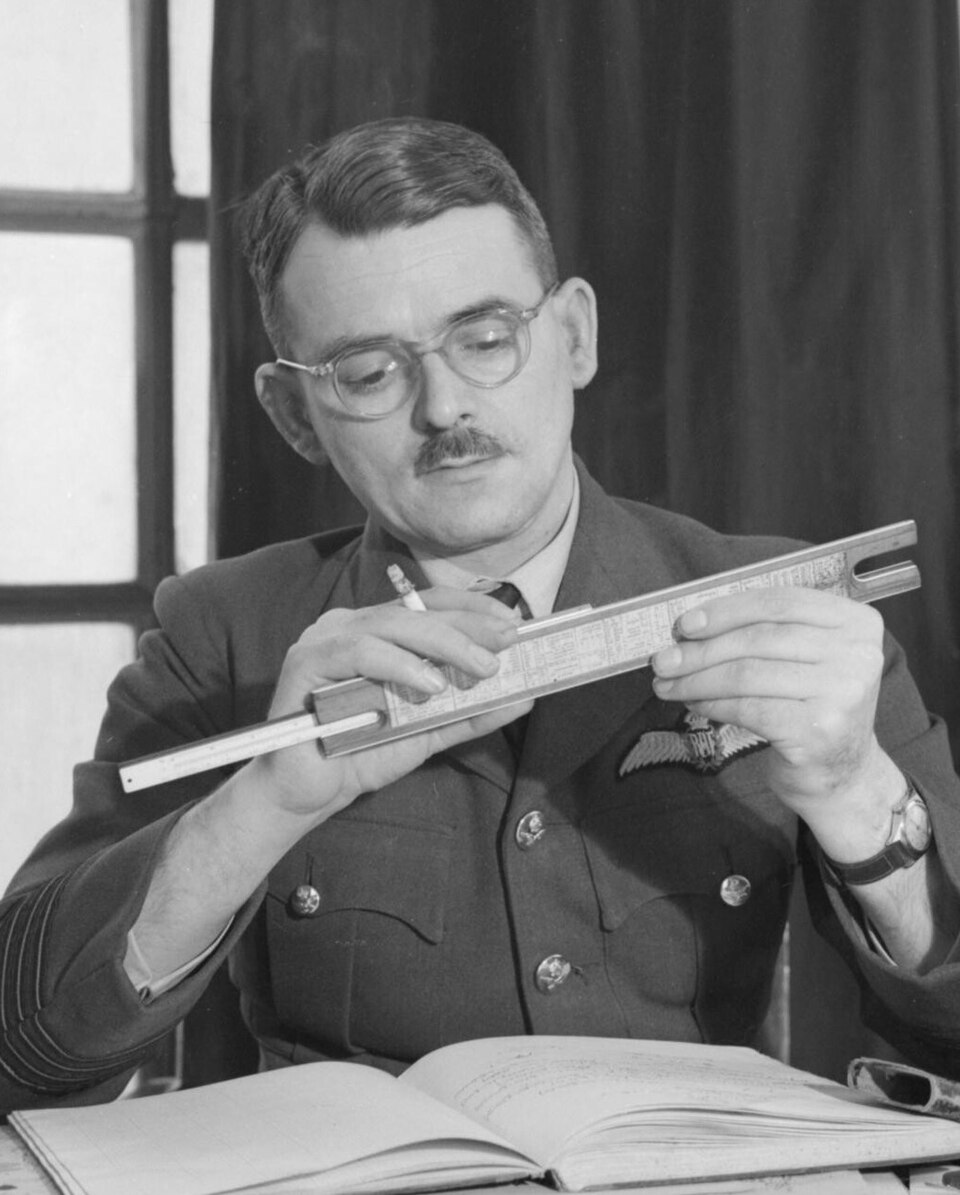
What failed
He reported to RAF Halton as an aircraft apprentice in January 1923, lasted two days and failed the medical at five feet tall; six months of physical training and a special diet got him rejected again, and he entered the service only by applying a third time under a name not his own. In 1929, after an interview at the Air Ministry's South Kensington laboratory, he was told that successful development of his scheme was considered impracticable. When the £5 renewal fee on his 1930 patent fell due the Ministry refused to pay it and he could not afford it, so the patent lapsed. The design had in any case been readable worldwide since publication in 1932, the Air Ministry having declined to place it on the secret list. Power Jets, incorporated in March 1936, was told in 1937 that its backers would go no further than £5,000, and in early 1940 the government routed production contracts around the company to British Thomson-Houston and Rover. His smoking reached three packets a day, he sniffed Benzedrine to hold sixteen-hour days and dropped to nine stone, and on 10 December 1941 he had a nervous breakdown, just under seven months after his engine flew.
What happened next
The W.1-powered Gloster E.28/39 flew from Cranwell on 15 May 1941 for seventeen minutes, and within days was reaching 370 mph at 25,000 ft, faster than the Spitfire. The W.1X engine and the W.2B drawings were flown to the United States on 1 October 1941, and General Electric's derivative, the I-A, flew the Bell XP-59A a year later. The Gloster Meteor was in service from July 1944, Meteors of 616 Squadron shot down V-1 flying bombs, and Whittle was promoted air commodore. Power Jets was nationalised in 1944; Whittle spent six months in hospital with nervous exhaustion and resigned from the company in January 1946. He received an ex-gratia £100,000 from the Royal Commission on Awards to Inventors in May 1948 and was made a Knight Commander two months later, and he retired from the Royal Air Force in 1948 owing to ill health.
The point
Two of the failures usually attached to his name do not survive checking. The Air Ministry that called the scheme impracticable in 1929 sanctioned the agreement that created Power Jets in 1936, then bought the engine and ordered a flyable version in 1939; and the nationalisation of 1944 followed a proposal Whittle made himself in April 1943, that all jet development be nationalised — Cripps decided instead to nationalise Power Jets alone, and Whittle had already offered to surrender his shares. The 1929 verdict was not a flat no either: Griffith wrote in the same letter that the internal combustion turbine would almost certainly be developed into a successful engine, once compressors and turbines were greatly improved. Britain was not first into the jet age — Heinkel's He 178, on Hans von Ohain's engine, flew in August 1939, twenty months before the E.28/39 — and the lapsed patent did not hand the design to anybody, because it had been published worldwide in 1932. What the record actually shows is eleven years between the patent and the flight, most of them spent short of money and arguing with officials, and a body that gave way repeatedly: a breakdown in December 1941, six months in hospital from March 1944, and a third collapse on an American lecture tour in 1948 that ended his RAF career. Every one of them came after the aeroplane had flown.
The sequence
7 documented failures, shown with the successes in between. Every entry carries its own source — the wins are part of the record, and leaving them out is how these stories get distorted.
- 1923
Reports to RAF Halton as an aircraft apprentice in January and is thrown out after two days, having failed the medical at five feet tall.
- 1923
Rejected a second time six months later, after an intense physical training programme and a special diet.
- 1923
He applies a third time under a name not his own, passes the written examination and is accepted. The sources disagree on the detail: the Telegraph obituary says he used a different first name, Wikipedia says an assumed name, and the enrolment that followed is recorded under his own name.
- 1923
Starts a three-year apprenticeship at Cranwell in September, enrolled as 364365 Boy Whittle, F.
- 1928
Graduates from the RAF College second in his class and wins the Andy Fellowes Memorial Prize for Aeronautical Sciences for his thesis. The thesis argued for high-altitude high-speed flight; the turbojet came later.
- 1929
After an interview at the Air Ministry's South Kensington laboratory, where A. A. Griffith scorns the proposal, the Ministry tells him development of his scheme is considered impracticable.
- 1929
The verdict was not the flat no it is usually reported as. Griffith's objection was to the materials and efficiencies of 1929, and the same letter says the engine will almost certainly be built one day.
- 1930
Files his first turbojet patent on 16 January, after an instructor at the flying school offers to help him apply.
- 1932
The Air Ministry declines to put the patent on the secret list, and it is published worldwide. The design is readable by anyone three years before the patent lapses.
- 1934 or 1935
The patent lapses over a £5 renewal fee. The sources disagree on when and why: Wikipedia dates the renewal to January 1935 and says the Air Ministry refused to pay while Whittle could not afford it; the National Academy of Engineering also says 1935, but that he decided not to spend the money; the Sir Frank Whittle Commemorative Trust dates the lapse to January 1934 on two separate pages; the Telegraph obituary gives no date at all.
- 1936
Takes a First in the Mechanical Sciences Tripos at Peterhouse, Cambridge.
- 1936
Power Jets Ltd is incorporated in March, under a Four Party Agreement sanctioned by the Air Ministry.
- 1937
The Whittle Unit bench test engine runs for the first time on 12 April.
- 1937
After the Aeronautical Research Committee's engine sub-committee funds Griffith's rival design instead, Power Jets' backers cap their investment at £5,000.
- 1939
After a successful demonstration, the Air Ministry buys the engine, lends it back, and orders a flyable version.
- 1940
Production and development contracts go direct to BTH and Rover, bypassing Power Jets.
- 1941
The W.1-powered Gloster E.28/39 flies from Cranwell on 15 May, for seventeen minutes.
- 1941
Within days the aeroplane is reaching 370 mph at 25,000 ft, faster than the Spitfire.
- 1941
The W.1X engine and the W.2B drawings go to the General Electric Company on 1 October. GE's version of it, the I-A, powers the first American jet aircraft a year later.
- 1941
Just under seven months after the flight he has a nervous breakdown and is away from work for a month.
- 1943
In April, at a demonstration of the E.28/39 to Churchill, Whittle proposes to Cripps that all jet development be nationalised, and says he is willing to surrender his shares. In October Cripps tells him he will nationalise Power Jets alone.
- 1943
Whether his proposal caused the decision is disputed. Whittle believed it did; Wikipedia's account has Cripps already resolved on a government-owned establishment.
- 1944
Power Jets is nationalised, and the sources differ on the price: Wikipedia gives £135,500, the Telegraph obituary £135,563 10s. They agree that Whittle was paid nothing for the company, having already offered to surrender his shares; the Telegraph values those shares at £47,000.
- 1944
On 5 April, after the final terms are agreed on 28 March, the Ministry sends him an award of £10,000 for his shares. Wikipedia records the award; the Telegraph obituary does not mention it.
- 1944
The Telegraph obituary gives the same outcome for the sale: he received nothing, having handed his shares, worth £47,000, to the ministry beforehand.
- 1944
Spends six months in hospital with nervous exhaustion from the end of March, and resigns from the company in January 1946.
- 1944
The Meteor is in service from July, and the RAF's Meteor squadrons are used mostly against the V1 flying bombs.
- 1944
Whittle is promoted air commodore, with Meteors of 616 Squadron shooting down V-1s.
- 1948
Awarded an ex-gratia £100,000 by the Royal Commission on Awards to Inventors in May, and made a Knight Commander of the Order of the British Empire two months later.
Sources
- Sir Frank Whittle — obituary, The Daily Telegraph, 10 August 1996 (reproduced by Cambridge University Engineering Department)
Fearing in this period that private industry would harvest the pioneering discoveries of Power Jets for nothing, Whittle suggested that it should be nationalised.
- Sir Frank Whittle — obituary, The Daily Telegraph, 10 August 1996 (Cambridge University Engineering Department)
During 10 hours of flying over the next few days, the experimental aircraft - flown by the test pilot Gerry Sayer - achieved a top speed of 370 mph at 25,000 ft. This was faster than the Spitfire, or any other conventional propeller-driven machine.
- Frank Whittle — Wikipedia
Still at Cambridge, Whittle could ill afford the £5 renewal fee for his jet engine patent when it became due in January 1935, and because the Air Ministry refused to pay it the patent was allowed to lapse.
- Frank Whittle — Memorial Tributes: Volume 10, National Academy of Engineering
The Air Ministry advised Whittle that it had no official interest in the patent, so it was not put on the Secret list, and it was published worldwide in its 1932 issue.
- World War II and the jet engine — Lord Kings Norton Archive, Cranfield University
Surprisingly, the Air Ministry showed no official interest in the patent, and allowed international publication.
- Whittle W.1X Engine — National Air and Space Museum, Smithsonian Institution
The W.1X and drawings of the W.2B production engine were delivered to the General Electric Company on October 1, 1941. GE's improved and uprated version, the IA, powered the first U.S. jet aircraft, the Bell XP-59A Airacomet on October 2, 1942.
- A Tribute to a Cambridge Engineering Student — Cambridge University Engineering Department (Cohen and Knell)
He retired from the Royal Air Force in 1948, owing to ill health.
- The First Patent — Sir Frank Whittle Commemorative Trust
It lapsed in 1934 when Whittle found himself unable to afford the renewal fee of £5.
- Timeline — Sir Frank Whittle Commemorative Trust
Powered by the short-lived Ohain engine, the Heinkel He. 178 makes a 6 minute flight in August and again in November.
Use the ← and → keys to move between entries.
Related failures
Others in technology & invention, and nearby.
Sir James Dyson
Industrial design
5,127 prototypes. That is one method, run five thousand times.
1 documented failure
King Camp Gillette
Invention and manufacturing
Metallurgists at MIT told him it could not be done. He spent six more years failing at it.
6 documented failures
Garrett Morgan
Invention
He hired a white actor to pose as the inventor, then demonstrated his own breathing hood under an assumed name.
7 documented failures
Les Paul
Music and invention
Gibson called him the kid with the broomstick with the pickups on it.
6 documented failures