Lucille Ball
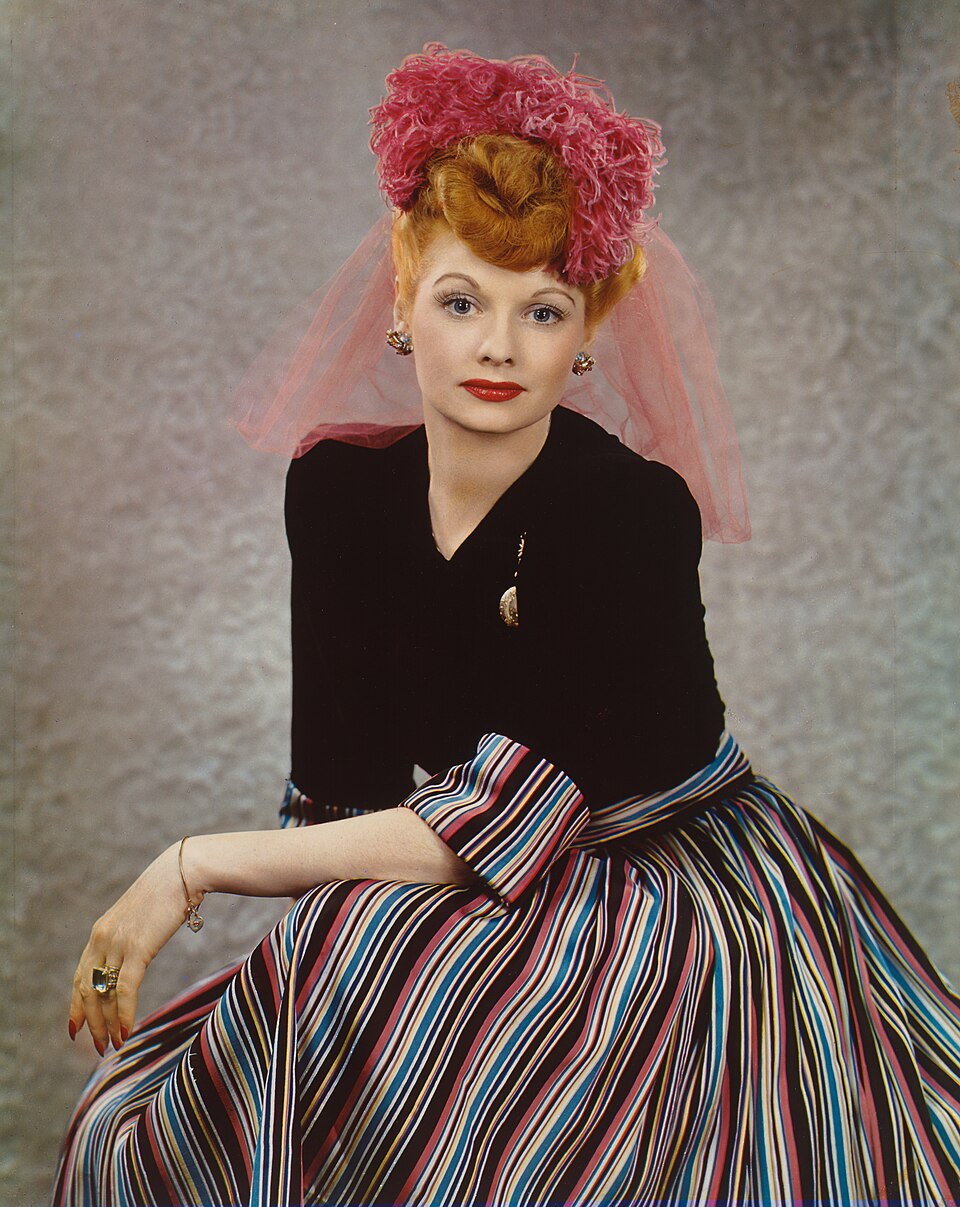
What failed
Her mother enrolled her at the John Murray Anderson School for the Dramatic Arts in New York in 1926, and her instructors told her to her face that she would not succeed in the business. Rheumatic fever then stopped her acting attempts at an early stage and left her unable to work for two years. Her chorus work in New York did not last. Earl Carroll hired and quickly fired her from his Vanities. The second firing is told two ways: Florenz Ziegfeld Jr. dropping her from a touring company of Rio Rita, or the Shuberts dropping her from Stepping Stones. One reference work says only that she was chosen for these shows and that none of the engagements materialised. The sources also disagree on when this happened, and the entry asserts no year for it. She reached Hollywood in 1933 as an uncredited Goldwyn Girl and worked there for eighteen years without becoming a major star, appearing in more than seventy-five films — bit parts at first, leads in B-pictures later, support in A-pictures — and was known around Hollywood as Queen of the Bs. Her one attempt at Broadway in this period, the Bartlett Cormack play Hey Diddle Diddle, closed after a week in Washington in 1937 and never reached New York. She signed with Metro-Goldwyn-Mayer in the 1940s and never achieved major stardom there either.
What happened next
CBS Radio cast her as Liz Cooper in My Favorite Husband in 1948 and then asked her to adapt it for television. She insisted on casting her husband, Desi Arnaz; CBS executives doubted an American redhead and a Cuban bandleader would be accepted as a couple, so in 1950 the pair took a vaudeville act on the road to show that an audience existed. The tour was a hit, a pilot was ordered and shot in March 1951, and CBS was still unimpressed by it before the network put the show into its schedule. I Love Lucy went on the air on 15 October 1951, ten weeks after her fortieth birthday, and was number one by February of its first season. Desilu, the company she and Arnaz had founded in 1950, kept the post-broadcast rights to the episodes and in late 1957 bought the RKO production facilities, where she had been a contract player. In November 1962 she bought out Arnaz's holdings and succeeded him as president; she had co-owned the company for twelve years, so 1962 is when she took the presidency rather than when she first ran anything, and it made her the first woman to head a major television production studio. Under her, Desilu developed Mission: Impossible, Mannix and Star Trek; NBC rejected the first Star Trek pilot in February 1965 and ordered a second. She agreed to sell the company to Gulf+Western in 1967. The failures did not stop once the success arrived: her only Broadway show, Wildcat, ran 171 performances and closed early in 1961; Mame flopped in 1974 and was her last film; ABC cancelled Life with Lucy less than two months into its run in 1986. She died on 26 April 1989, aged 77.
The point
The record is not a long wait followed by a reward. It is eighteen years of steady, continuous film work that never produced stardom, a Hollywood nickname that measured exactly how far she had got, and then a move at forty into television. The failures carried on afterwards: the Broadway show closed early, the last film flopped, the last sitcom was cancelled inside two months. Her working life was not divided into a failing half and a succeeding half; both ran the whole length of it. Three of the stories usually told about her do not hold up. The drama-school letter — the line about her mother wasting her money, or Lucy wasting her time and theirs — has no surviving document behind it, and Ball told the story several different ways over her life, which is the tell; what is documented is that her instructors thought she would not succeed and said so to her face. The tidy figure of forty-three B-movies is too low and too neat at once: the record shows more than seventy-five films before I Love Lucy, and the single label collapses bit parts, uncredited walk-ons, B-picture leads and support in A-pictures into one bucket. And the claim that Ball personally rescued Star Trek is repeated far more confidently than the record supports: as the majority shareholder she had the power to kill the project and did not, which Fact Trek points out is not the same thing as fighting for it. Even reference works garble this — the Museum of Broadcast Communications encyclopedia cited below says her clout with CBS got Star Trek picked up, and Star Trek went to NBC.
The sequence
8 documented failures, shown with the successes in between. Every entry carries its own source — the wins are part of the record, and leaving them out is how these stories get distorted.
- 1926
Enrolled by her mother at the John Murray Anderson School for the Dramatic Arts in New York, where her instructors tell her she will not succeed in the business.
- 1928
She returns to New York after the school and finds work as a house model for the fashion designer Hattie Carnegie.
- c. 1930
Rheumatic fever stops her acting attempts at an early stage and leaves her unable to work for two years.
- undated, before 1933
Working in the New York chorus under the stage name Diane Belmont, she is hired and then quickly fired twice, by Earl Carroll and by Florenz Ziegfeld Jr. or, in another account, the Shuberts. The sources disagree both on when and on what happened: Wikipedia places the firings after a return to New York in 1932, other biographical accounts put them in her earlier attempt at the end of the 1920s, and some say she was cast for the engagements rather than fired from them, and that they never took place. This entry asserts no year.
- 1933
Cast, uncredited, as one of the Goldwyn Girls in Roman Scandals, which takes her to Hollywood.
- 1933-1951
She appears in more than seventy-five films before I Love Lucy — bit parts at first, leads in B-pictures later — without becoming a major star.
- 1936
She registers to vote listing her party affiliation as Communist. It surfaces seventeen years later.
- 1937
Hey Diddle Diddle, the play she hoped would take her to Broadway, closes after one week in Washington and never opens in New York.
- 1937
She plays a substantial part in Stage Door alongside Ginger Rogers and Katharine Hepburn.
- 1940s
She signs with Metro-Goldwyn-Mayer and never achieves major stardom there. Around Hollywood she is Queen of the Bs, a title held before her by Fay Wray and after her by Ida Lupino.
- 1942
She wins the lead opposite Henry Fonda in The Big Street, a part bigger names had declined, and later calls it her best performance.
- 1943
For Du Barry Was a Lady, her first MGM picture and her first in colour, she dyes her hair the red that becomes her trademark.
- 1948
She is cast as Liz Cooper in the CBS radio comedy My Favorite Husband. The character had been Liz Cugat until the bandleader Xavier Cugat sued.
- 1950
Desilu Productions is founded, jointly, out of their two first names.
- 1950
CBS doubts an audience will accept her and Desi Arnaz as a married couple, so the two take a vaudeville act on tour to prove otherwise. This comes before the pilot, not after it.
- 1951
A pilot is ordered and kinescoped in Hollywood in March.
- 1951
CBS is unimpressed by the pilot, which the couple's own company had produced.
- 1951
I Love Lucy goes on the air on 15 October, ten weeks after her fortieth birthday.
- 1952
The show reaches number one by February of its first season and stays number one for four of its six years on the air.
- 1953
A Walter Winchell broadcast threatens to end her career; she is one of the few television stars of the decade to fight the HUAC hunts and survive them.
- 1953
She meets a HUAC investigator voluntarily in Hollywood on 4 September and gives sealed testimony.
- 1957
Desilu buys the RKO production facilities for six million dollars, the lot where she had been a contract player.
- 1961
Wildcat, her only Broadway show, closes after 171 performances, hampered by lukewarm reviews and her own illness.
- 1962
She buys out Arnaz's holdings in November and succeeds him as president of Desilu, a company she had co-owned since 1950.
- 1962
The buyout makes her the first woman to head a major television production studio. The word television is the load-bearing one in that claim.
- 1964-1966
The record does not support the story that she personally rescued Star Trek. As the majority shareholder she could have killed the project and did not, which is a different thing.
- 1965
NBC rejects the first Star Trek pilot in February and orders a second.
- 1966-1967
Desilu, with Ball as president and majority shareholder, develops Mission: Impossible, Star Trek and Mannix.
- 1967
She agrees to sell Desilu to Gulf+Western, which had recently acquired Paramount Pictures.
Sources
- Lucille Ball (Wikipedia)
Ball's instructors felt she would not be successful in the entertainment business, and were unafraid to directly state this to her.
- Ball, Lucille — Encyclopedia of Television, Museum of Broadcast Communications (Internet Archive)
She came to television after nearly 20 years in motion pictures, having undergone a gradual transformation from a platinum blonde sex symbol to a wise-cracking redhead.
- Lucille Ball (National Women's Hall of Fame)
She appeared in more than 75 films even before starting the show that would ultimately change the face of entertainment.
- TCM Summer Under the Stars: Lucille Ball (Turner Classic Movies)
Success as a model led to small chorus parts and auditions for theatre moguls like Earl Carroll and Florenz Ziegfeld Jr.
- I Love Lucy (Wikipedia)
To prove CBS wrong, the couple developed a vaudeville act, written by Carroll and Pugh, that they performed at Newburgh, NY's historic Ritz Theater with Arnaz's orchestra.
- Desilu (Wikipedia)
In November 1962, Arnaz resigned as president when his holdings in the company were bought out by Ball, who succeeded him as president.
- Wildcat (musical) (Wikipedia)
Hampered by lukewarm reviews and Ball's lingering illness, it ran for only 171 performances.
- The Cage (Star Trek: The Original Series) (Wikipedia)
In February 1965, NBC rejected it, and the network ordered another pilot episode, which became "Where No Man Has Gone Before."
- Lucy Loves Star Trek? (Fact Trek, Michael Kmet and Maurice Molyneaux)
That she didn’t isn’t quite the same thing as actively going to bat for the show against NBC, the rest of the board, and whatever newly imagined obstacle is posited for her to knock down.
- Ball, Lucille — Encyclopedia of Television, Museum of Broadcast Communications (Internet Archive)
Began her performing career in the 1920s under the name Diane Belmont, being hired for, then quickly fired from, Earl Carroll's Vanities and the Shuberts' Stepping Stones
- Lucille Ball Biography (Notable Biographies)
She was chosen to appear in Earl Carroll's Vanities, for the third road company of Ziegfeld's Rio Rita, and for Step Lively, but none of these performances materialized.
- Lucy Loves Star Trek? (Fact Trek, Michael Kmet and Maurice Molyneaux)
On November 9, 1962, she purchased Desi Arnaz’s stock interest in Desilu Productions and, with 52% of the company’s stock, became the majority owner of the studio.
Use the ← and → keys to move between entries.
Related failures
Others in comedy, and nearby.
Buster Keaton
Filmmaker and comedian
He signed the contract everyone warned him against, lost his films, and came back as an anonymous gag writer.
3 documented failures

Bob Odenkirk
Comedian and actor
A decade of pilots that never aired and two films critics hated. He was forty-six when the three-episode part turned up.
3 documented failures
Rodney Dangerfield
Comedian
He quit comedy for about a decade to sell aluminium siding, then came back in his forties under a different name.
4 documented failures
Joan Rivers
Comedy
Seven years of unpaid rooms and temp typing — then, as a last-minute replacement, Johnny Carson told her on air she was going to be a star.
3 documented failures