Charles Goodyear
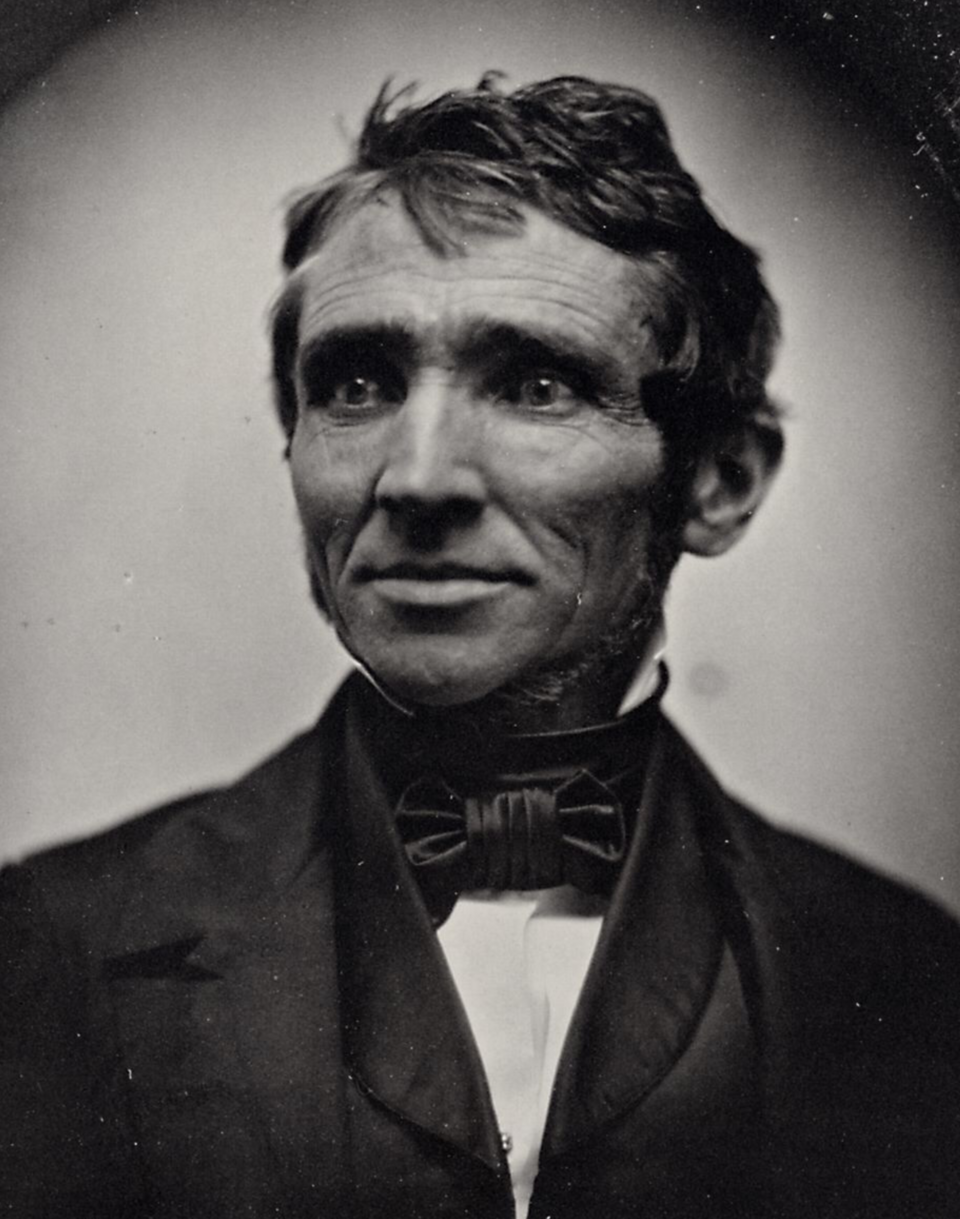
What failed
The Philadelphia hardware branch he ran for his father failed in 1830, and a creditor had him jailed. Under the laws then in force he was imprisoned for debt again and again over the next twenty-five years. From the summer of 1834 he spent five years trying to cure India rubber by trial and error, working in the kitchen of his cottage or in prison when he was confined there; he had no training in chemistry and mixed the gum with whatever came to hand. A magnesia and quicklime compound won him prize medals at two New York institute fairs in 1835, until he noticed that a drop of weak acid turned the rubber soft again. He patented a nitric acid process on 17 June 1837, months after the panic that year had swept away his associate's entire fortune and left him penniless. In 1838 he took a government order for 150 mail-bags, which everyone treated as the public test of the process, and while he was away a few weeks the bags decomposed and dropped off their handles. Only six of his twelve children survived to adulthood. The children dug their potatoes before they were half grown, and he sold their schoolbooks at auction for five dollars.
What happened next
In January 1839, testing heat on the same sulphur compound that had ruined the mail-bags, he found that a specimen brought carelessly against a hot stove charred like leather instead of melting. The story is always told as an accident, and Goodyear himself refused the word: the discoveries were, he wrote, not what is commonly termed accident but the result of the closest application and observation. His sources do not even agree on where it happened - his own 1853 account puts it at the Woburn factory in front of witnesses who thought it not worth noticing, while Peirce's 1866 life, following his daughter's recollection, puts it in the family kitchen on a winter evening with a piece of gum in his hand as he gestured in argument. The sulphur was not his idea either: he had bought Nathaniel Hayward's sulphur patent at Woburn in 1838 and hired Hayward to work for him. The 1852 court record calls what he found an elementary discovery, and it took five more years to make repeatable; US patent 3633 was issued on 15 June 1844. Thomas Hancock's English vulcanisation patent was begun in 1843, months ahead of the American patent, and when Goodyear challenged it in London in 1855 he lost. American rivals sued, claiming he had stolen the process; Daniel Webster argued the Trenton case against Horace H. Day for him in 1852 and the court decreed a perpetual injunction. Webster's fee was fifteen thousand dollars. Goodyear kept spending - fifty thousand dollars on his rubber exhibit at the Paris Exposition Universelle - and Napoleon III's Cross of the Legion of Honour reached him in a debtors' prison outside Paris in 1855. The Commissioner of Patents extended the patent for seven years in June 1858, on a finding that the inventor was still poor and oppressed with debt. He died in New York on 1 July 1860, aged 59, travelling to a dying daughter he did not reach in time. The Goodyear Tire and Rubber Company was founded in 1898 and named after him by people who never met him.
The point
The record does not show a man paid for being right. It shows a man who was right in January 1839 and could not get the rubber men standing beside him to think the moment worth noticing, who waited two more years before anyone would believe a valuable discovery had been made, and five before a patent. He was carried off to prison for debt after the discovery as well as before it, and took his discharge under a bankrupt law he had spent his life opposing. When the Patent Office extended his patent in 1858 it did so on a finding that he was still poor and oppressed with debt. The two hundred thousand dollar figure at his death is softer than it looks - he had never kept a proper account, and his son afterwards untangled the books and paid the creditors off - but he had earned about a hundred and sixty-three thousand dollars from the patent and owed a good deal more than that. The company that carries his name was founded thirty-eight years later by strangers.
The sequence
13 documented failures, shown with the successes in between. Every entry carries its own source — the wins are part of the record, and leaving them out is how these stories get distorted.
- c. 1826
His father, prospering in Connecticut, opens a branch hardware store in Philadelphia and sends him to manage it. They sell only American-made goods.
- 1830
The hardware business fails. His creditors press, and he is put in debtors' prison for the first time, in Philadelphia.
- 1834
Back at his Philadelphia home in the summer, he begins what turns into five years of trial-and-error experiments to cure rubber, worked in his kitchen or in prison when he is confined there.
- 1835
Articles made from his magnesia and quicklime compound are shown at two New York institute fairs and both award him prize medals. The same source records that the process soon proved a failure.
- undated, mid-1830s
A drop of weak acid falling on the cloth neutralises the alkali and turns the rubber soft again, which proves the cure worthless. The source does not date it.
- 1837
The panic of 1837 sweeps away his associate's entire fortune and leaves Goodyear penniless.
- 1837
On 17 June he patents the surface treatment he calls the acid-gas process.
- 1838
At Woburn he finds Nathaniel Hayward experimenting with sulphur, buys Hayward's sulphur patent and hires him for a year. The sulphur was not Goodyear's idea.
- 1838
The government mail-bags, made in the warm season and left on show as the public test of the acid-gas process, decompose while he is away a few weeks and drop off their own handles.
- 1839
Testing heat on the same compound that had decomposed in the mail-bags, he finds that a specimen brought carelessly against a hot stove chars like leather instead of melting.
- 1839
The circuit court later dates the elementary discovery of vulcanised rubber to January 1839, four or five months after he bought the sulphur patent.
- 1839
He calls the men in the room, who know the trade, to look at the charred specimen. They take it for another of his enthusiasms and think it not worth noticing.
- 1839
The sources disagree about the moment itself. Goodyear's own 1853 account puts the specimen against a hot stove at the Woburn factory and refuses the word accident; Peirce's 1866 life, following the daughter's recollection, puts it in the family kitchen on a winter evening, with a piece of gum in his hand as he gestured in argument, and calls it accidental.
- 1839-1841
Two years pass after the discovery before he can convince anyone that anything valuable has been found.
- 1840
A year after the discovery he writes to two Boston backers from the debtor's jail, inviting them to call on him at his lodgings and possibly set up an India rubber factory on the spot. The letter is produced in court twelve years later.
- 1843
Thomas Hancock patents vulcanisation in England, months ahead of Goodyear's American patent. How Hancock arrived at the process is still argued over, and the sources disagree on what his patent cost Goodyear: the Linda Hall Library says it meant Goodyear could not secure a British patent, while the 1858 decision of the Commissioner of Patents records that Goodyear obtained an English patent through his agent on 30 January 1844.
- 1843
Thrown into prison for debt again, he takes his release under the bankrupt law about ten days before its repeal - a law he had always opposed and had firmly resolved never to use.
- 1844
Five years after the discovery, the perfected treatment is patented at last, on 15 June.
- 1844
Rival rubber manufacturers begin suing him, falsely claiming the process was stolen from them.
- 1852
In the Great India Rubber Case at Trenton, argued by Daniel Webster for Goodyear against Rufus Choate, the circuit court refuses to send the case to a jury and decrees a perpetual injunction.
- 1852
Webster is paid fifteen thousand dollars for his part in the case.
- 1855
In London he challenges Hancock's English patent and loses, unable to sustain the charge that Hancock had stolen the process from him.
- 1855
Napoleon III's Grand Medal of Honour and Cross of the Legion of Honour, awarded for his rubber exhibit at the Paris Exposition Universelle, reach him in a debtors' prison on the edge of the city.
- 1858
The Commissioner of Patents, weighing the application to extend the patent, finds the inventor still poor and in debt at the end of it all.
- 1858
The patent is extended for a further seven years from 15 June.
Sources
- Charles Goodyear (Wikipedia)
Goodyear had never made a proper accounting of his debt, and at the time of his death his estate was in almost $200,000 of debt.
- Charles Goodyear, Gum-Elastic and Its Varieties (1853), p. 120 (Internet Archive)
While the inventor admits that these discoveries were not the result of scientific chemical investigations, he is not willing to admit that they were the result of what is commonly termed accident; he claims them to be the result of the closest application and observation.
- Goodyear v. Day, Circuit Court, D. New Jersey, Sept. 28, 1852 (Federal Cases, Case No. 5,569)
He went on with his experiments, and within four or five months, that is to say, in January, 1839, he made an elementary discovery of metallic or vulcanized rubber.
- B. K. Peirce, Trials of an Inventor: Life and Discoveries of Charles Goodyear (1866), p. 107 (Internet Archive)
As the gum in its natural state melts at a low degree of heat, what was his astonishment to notice that it charred like leather without dissolving.
- United States Patent Office, Extension of the Goodyear Patent: Decision of the Commissioner, 14 June 1858 (Internet Archive)
The patent will therefore be extended for seven years from the 15th June, 1858.
- Richard F. Snow, "Charles Goodyear" (American Heritage, April/May 1978)
When he died in 1860, Goodyear was some two hundred thousand dollars in debt.
- Thomas Hancock, Scientist of the Day (Linda Hall Library)
What is certain is that he patented his vulcanization process in England in 1843, several months before Goodyear received his patent in the United States,
- NIHF Inductee Charles Goodyear and Vulcanized Rubber (National Inventors Hall of Fame)
His numerous patents were constantly infringed, and although he was able to establish his rights legally, he died a poor man.
- "The India Rubber Case Again - Extension of the Patent" (Scientific American, 19 February 1853)
The conspicuous litigants have been Goodyear, versus Horace H. Day.
- Charles Goodyear (EBSCO Research Starters, Patricia E. Sweeney)
When young Goodyear’s creditors pressed for their money, he was put in debtor’s prison for the first time. This was in 1830 in Philadelphia.
Use the ← and → keys to move between entries.
Related failures
Others in technology & invention, and nearby.

Sir James Dyson
Industrial design
5,127 prototypes. That is one method, run five thousand times.
1 documented failure
King Camp Gillette
Invention and manufacturing
Metallurgists at MIT told him it could not be done. He spent six more years failing at it.
6 documented failures
Garrett Morgan
Invention
He hired a white actor to pose as the inventor, then demonstrated his own breathing hood under an assumed name.
7 documented failures
Les Paul
Music and invention
Gibson called him the kid with the broomstick with the pickups on it.
6 documented failures