Abraham Lincoln
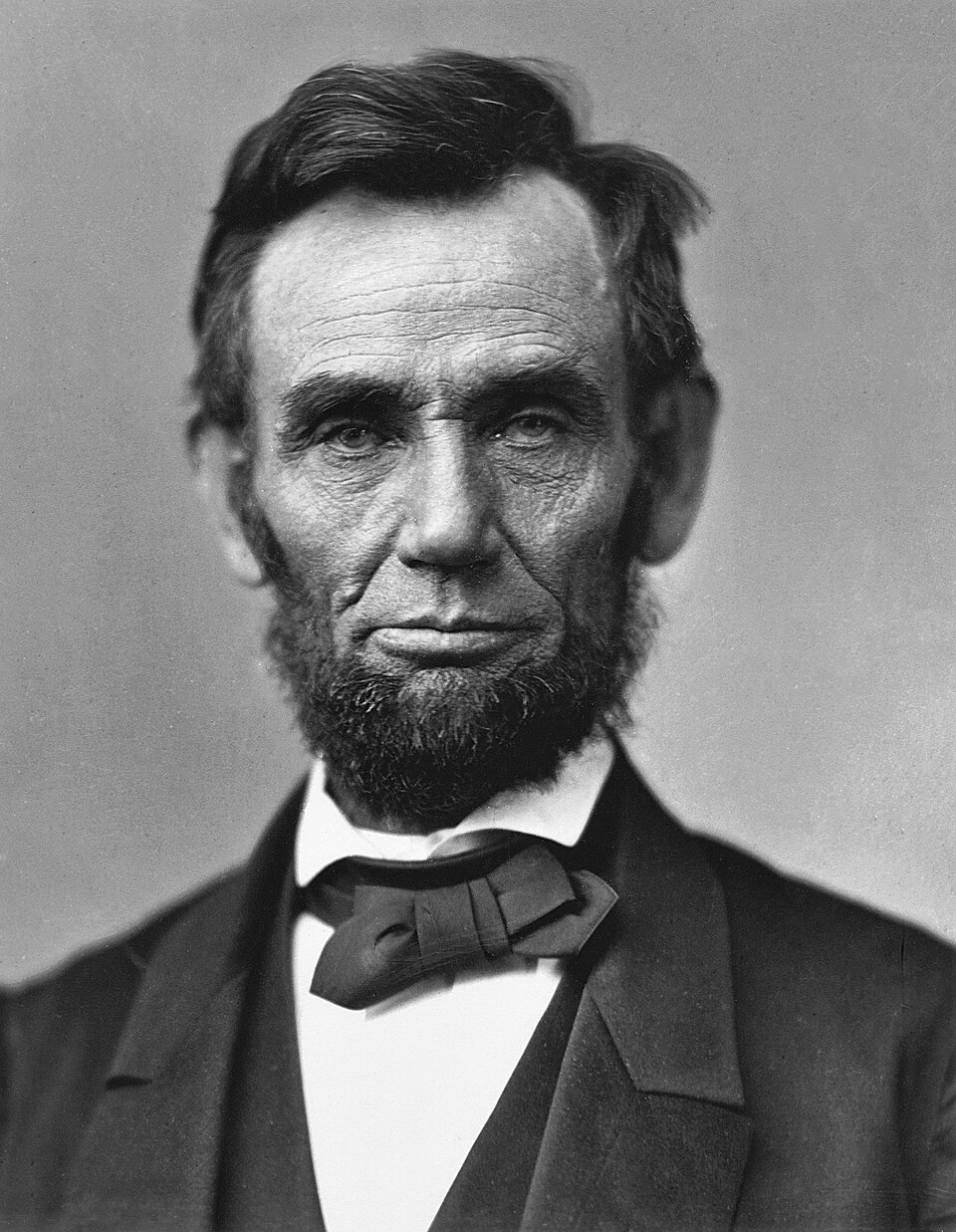
What failed
At 23 he lost his first election. At 24 the store he had bought on credit collapsed, leaving him roughly $1,100 in debt — and when his partner died he took on that half too, though he was not legally obliged to. He lost the Illinois House speakership twice, lost a congressional nomination, was passed over for a federal appointment, and lost two runs at the US Senate. Twice, in 1835 and January 1841, he collapsed into a depression severe enough that friends kept watch over him for fear he would kill himself; in the second episode they removed the razors and knives from his room.
What happened next
He kept getting elected to things. In the same year he lost his first election his militia company chose him as captain — the success he later said gave him more satisfaction than any other. He was elected to the Illinois House four times running, licensed to practise law, served a term in Congress, and built a practice of several thousand cases.
The point
His record is not a long drought followed by a miracle. It is wins and losses interleaved, continuously, for thirty years — which is what a working life actually looks like.
The sequence
11 documented failures, shown with the successes in between. Every entry carries its own source — the wins are part of the record, and leaving them out is how these stories get distorted.
- 1831
Hired as a clerk in Denton Offutt's New Salem store. Within a year Offutt's business collapsed and Lincoln was out of work. The business was never his — the myth's 'failed in business, 1831' misattributes it.
- 1832
Announces his first run for the Illinois General Assembly at 23, saying he has been too familiar with disappointments to be much chagrined by another.
- 1832
Elected captain of his volunteer company in the Black Hawk War — a success he said gave him more satisfaction than any he had afterwards.
- 1832
Defeated for the Illinois General Assembly, eighth of thirteen with the top four elected. The only time in his life he was beaten on a direct vote of the people.
- 1833
Appointed postmaster of New Salem, and deputy surveyor of Sangamon County.
- 1833
The Berry-Lincoln store, bought on credit, failed. The debt is traditionally put at about $1,100, though the standard study can document only around $512 of it from court records. Contemporaries recalled him calling it his national debt; the phrase is not in any surviving document of his.
- 1834
Creditors won judgments against him and levied on his possessions — including the horse and surveying instruments he needed to earn a living.
- 1834
Elected to the Illinois House of Representatives.
- 1835
At the sheriff's auction, a farmer named James Short bought Lincoln's tools and horse and gave them back to him. Short had heard him say he would let the whole thing go by the board.
- 1835
His partner William Berry died, and Lincoln assumed Berry's half of the store debt although he was not legally bound to.
- 1835
Ann Rutledge died and friends grew alarmed for his state of mind. The first documented period of severe depression. Historians dispute the nature of the relationship; the distress is documented.
- 1836
Re-elected to the Illinois House at the head of the poll, and licensed to practise law. The myth records this year as a nervous breakdown.
- 1837
Moved to Springfield, led the Whig effort to move the state capital there, and became junior partner to John T. Stuart.
- 1838
Defeated for Speaker of the Illinois House by William L. D. Ewing, on a party-line vote — while being one of its most experienced members.
- 1839
Named a Whig presidential elector at the state convention on 8 October 1839, and campaigned as one in 1840. The myth records him as defeated for elector in 1840.
- 1840
Defeated for Speaker a second time by William L. D. Ewing, 46 to 36, on 24 November 1840.
- 1841
Broke his engagement to Mary Todd and collapsed. He wrote to John T. Stuart that he was the most miserable man living; friends removed razors and knives from his room.
- 1843
Beaten by Edward D. Baker for the Sangamon County Whigs' backing for Congress, and appointed, against his wishes, one of the delegates pledged to Baker — like a groomsman, he wrote, to the man who had cut him out. At the district convention in May the nomination went to John J. Hardin.
- 1846
Elected to the United States House of Representatives, and served a full term.
- 1848
Did not stand for re-election, honouring the Whig rotation agreement that members step aside after one term. The myth records this as a defeat.
- 1849
Passed over for Commissioner of the General Land Office; the appointment went to Justin Butterfield.
- 1849-1854
Largely out of politics, building a law practice. The Lincoln Legal Papers database records 5,173 cases handled by Lincoln and his partners.
- 1855
Led the first Senate ballot in the legislature on 8 February 1855 with 45 votes, five short of the 50 needed because one senator abstained. On the tenth ballot he withdrew and his supporters elected Lyman Trumbull, 51 to 47 over Governor Joel Matteson.
- 1856
Nominated for Vice President by the Illinois delegation without seeking it, and took 110 votes on the informal ballot to William Dayton's 253. He was not at the convention and learned of it from friends afterwards.
- 1856
Writes privately that with him the race of ambition has been a failure, a flat failure.
- 1858
Republicans won a narrow statewide popular majority but lost the legislature, so Douglas kept the Senate seat. Lincoln wrote that he was glad he made the race, though he now sank out of view and would be forgotten.
- 1860
Elected President of the United States.
Sources
- Did Abraham Lincoln Endure Failure Before Presidency? (Snopes)
The statement that Lincoln 'failed in business' in 1831 is another misleading claim, because it implies that he was the owner or operator of the failed business, or at least was otherwise responsible for its failure. None of this is true.
- Abraham Lincoln's 'Failures' and 'Successes' (Abraham Lincoln Online)
1836 — Had nervous breakdown — Re-elected to Illinois state legislature (running first in his district); Received license to practice law in Illinois state courts.
- Abraham Lincoln Wasn't a 'Failure at 50.' (Scott A. Sandage, Slate)
As late as 2001, challenging the tide of popular belief, Lincoln scholar Douglas L. Wilson argued, 'Lincoln certainly knew failure, but his life could not, by any reasonable measure, be characterized as a series of failures.'
- Abraham Lincoln: A Life, vol. 1, chapter 4 (Michael Burlingame, Knox College)
William G. Greene testified that 'after this sudden death of one whom his soul & heart dearly & lov[e]d,' Lincoln's friends were 'Compelled to keep watch and ward over Mr Lincoln,' for he was 'from the sudden shock somewhat temporarily deranged.'
- Abraham Lincoln: A Life, vol. 1, chapter 6 (Michael Burlingame, Knox College)
Many friends, including James H. Matheny, 'thought L[incoln] would commit suicide.' They 'had to remove razors from his room – take away all Knives and other such dangerous things – &c – it was terrible.'
- Proceedings of the First Three Republican National Conventions (1893), p. 64
For William L. Dayton, of New Jersey, 253 votes; Nathaniel P. Banks, of Massachusetts, 46; Abraham Lincoln, of Illinois, 110;
Use the ← and → keys to move between entries.
Related failures
Others in politics, and nearby.

Luiz Inácio Lula da Silva
Trade unionism and politics
He lost three presidential elections in a row before winning the fourth.
4 documented failures
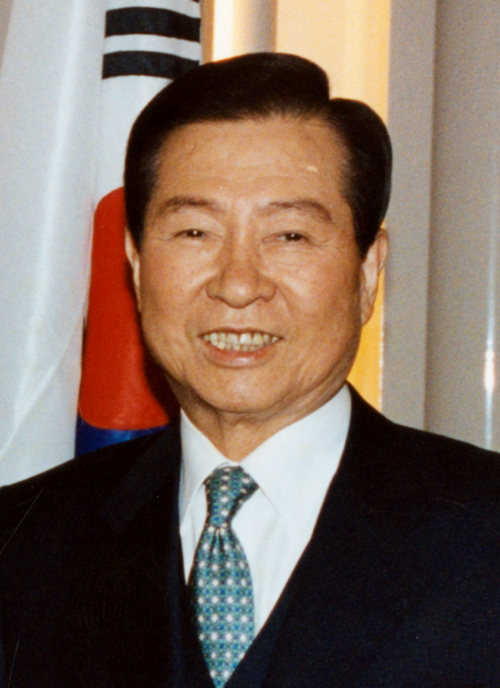
Kim Dae-jung
Politics
Three lost presidential elections, a kidnapping, and a death sentence — then the presidency and a Nobel Prize.
3 documented failures
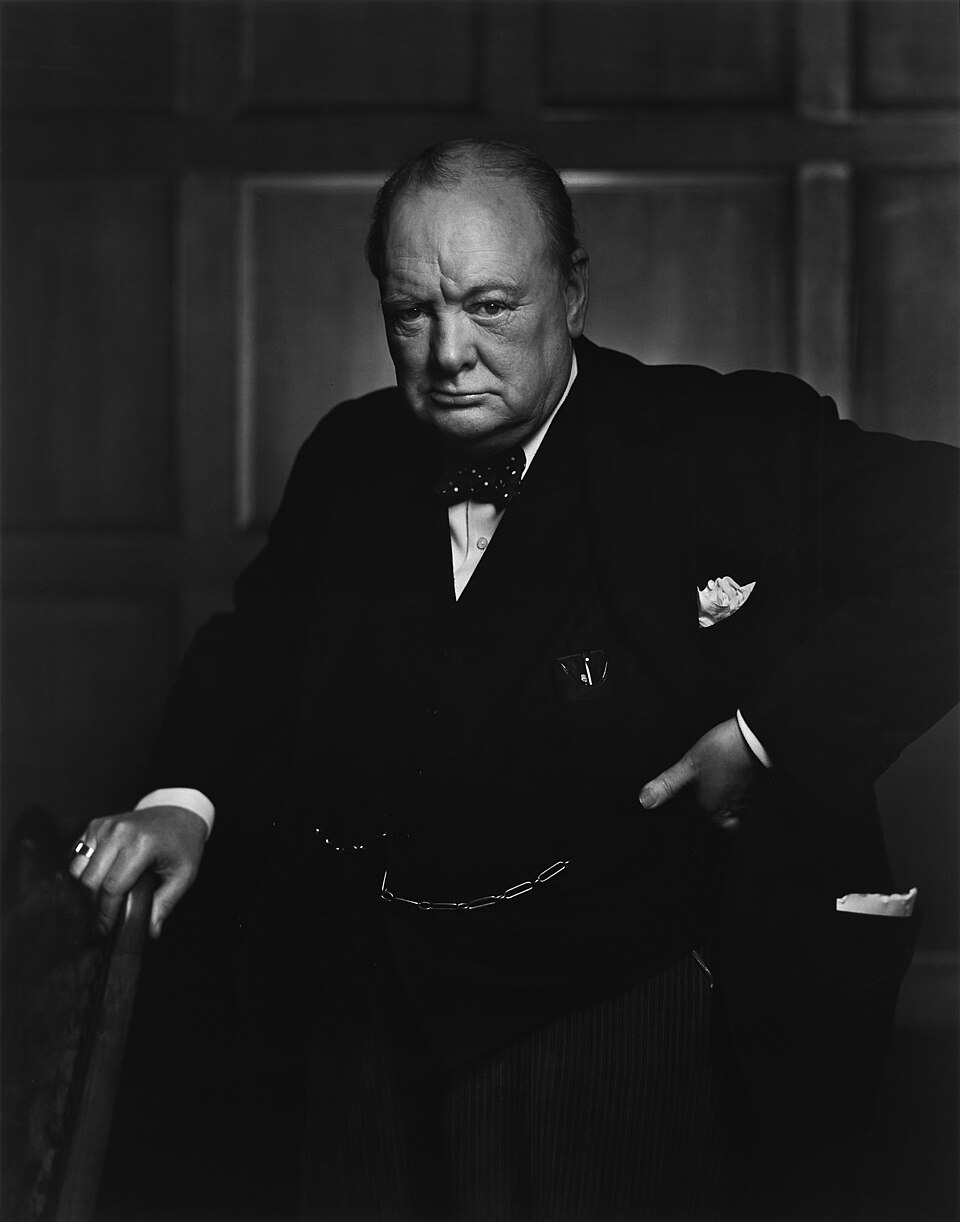
Winston Churchill
Politics
He lost his seat twice, was blamed for a military catastrophe, and spent the 1930s written off entirely.
9 documented failures
Nelson Mandela
Law and politics
Expelled from university, banned, on trial for treason for four and a half years, then jailed for twenty-seven.
4 documented failures