Tina Turner
What failed
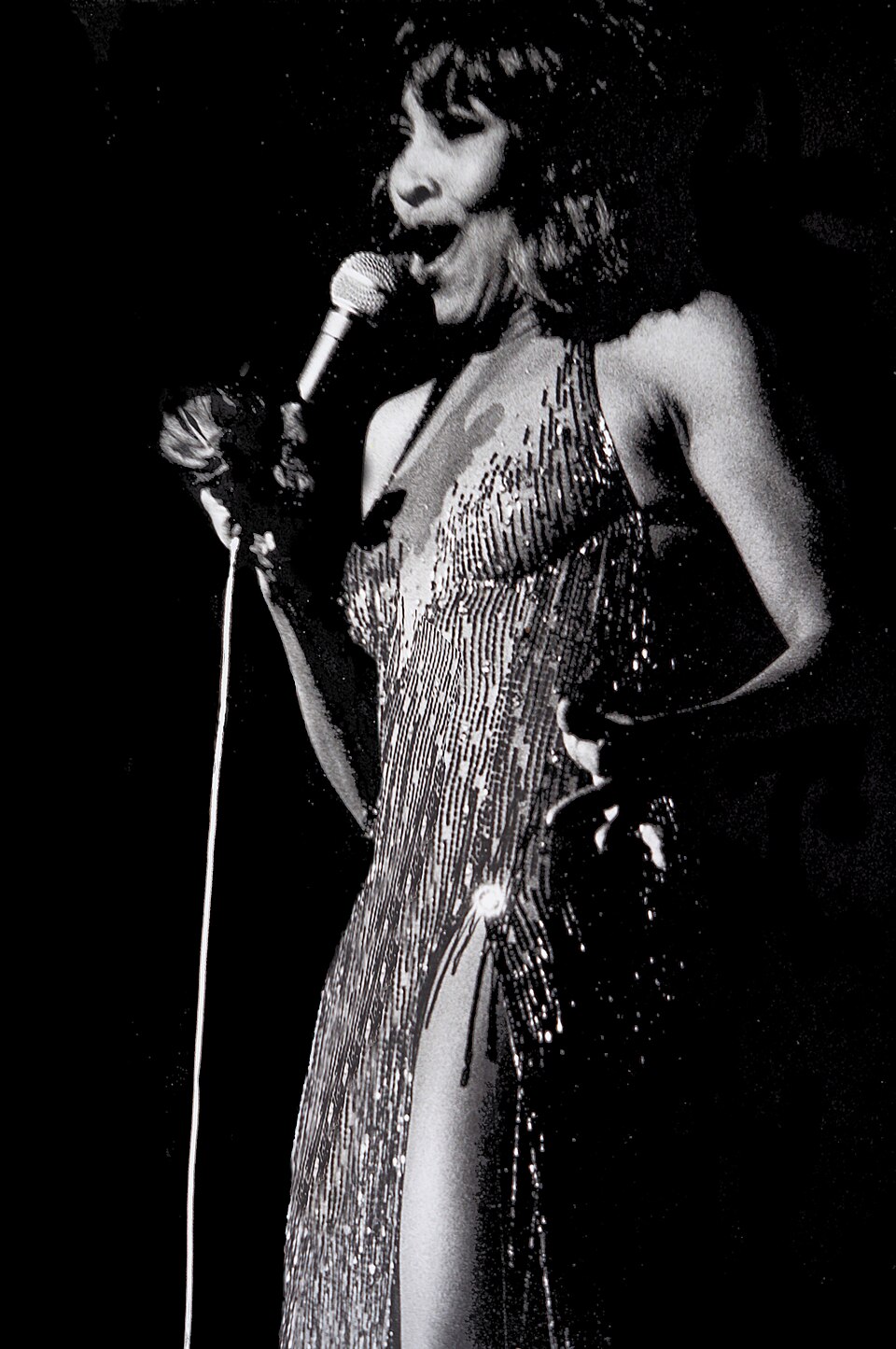
She fled Ike Turner at the Dallas Statler Hilton in early July 1976; her memoir and Wikipedia give 1 July, Dallas reporting gives 3 July, and the Associated Press says only early July. The cancelled Ike & Tina engagements turned into lawsuits against her. She earned money from game shows and variety television - Hollywood Squares, Donny & Marie, The Sonny and Cher Show, The Brady Bunch Hour - and took funding from Mike Stewart, an executive at United Artists Records, so that she could go back on the road and work off the debts. From 1977 she took the act to smaller venues and headlined cabaret shows at Caesars Palace in Las Vegas. The divorce decree, final on 29 March 1978, gave her the stage name, her songwriter royalties, her two Jaguars, her furs and her jewellery; it also gave her responsibility for the missed concert dates and an IRS lien. Rough in 1978 and its 1979 follow-up Love Explosion both failed to chart, and United Artists parted ways with her in 1979, the year the label was itself sold to EMI. Later that year, wanting work and money, she toured apartheid South Africa for five weeks against the international boycott. She turned forty in November 1979 with no American record deal, and until 1983 she was treated as a nostalgia act, playing hotel ballrooms and clubs.
What happened next
Roger Davies agreed to manage her in 1979 after seeing her at the Fairmont Hotel in San Francisco. Rod Stewart saw her at the Ritz in New York and brought her onto Saturday Night Live, where they performed "Hot Legs" on 3 October 1981; in November she opened three shows for the Rolling Stones. She signed with Capitol in 1983 - John Carter, the label's A&R man, signed her despite opposition from within Capitol. "Let's Stay Together" was released in November 1983 and reached number 26 on the Hot 100 in March 1984. Private Dancer followed on 29 May 1984 and peaked at number three on the Billboard 200; its sales are given as more than eight million copies by the Associated Press and more than twelve million worldwide by the album's Wikipedia article, and its singles won four Grammys in 1985, including record of the year. On 1 September 1984, at forty-four, she reached number one on the Billboard Hot 100 for the first and only time with "What's Love Got to Do with It". She was inducted into the Rock and Roll Hall of Fame as a solo artist in 2021, thirty years after being inducted with Ike, and died at her home in Küsnacht, near Zurich, on 24 May 2023.
The point
The record shows a woman who had been famous and then was not, for about seven years. The hits were fifteen years behind her, two albums had failed to chart, the label had gone, and the work available was hotel ballrooms, Las Vegas cabaret rooms and daytime television. She took money from a record executive in order to tour, and toured in order to pay debts she had been left holding; the divorce handed her the name and the liabilities in the same decree. The signing that ended the stretch was opposed from inside the label that made it. She was forty-four when the first number one of her career arrived, and it was her only one.
The sequence
8 documented failures, shown with the successes in between. Every entry carries its own source — the wins are part of the record, and leaving them out is how these stories get distorted.
- 1960
Anna Mae Bullock is presented to the public as Tina Turner on the single "A Fool in Love".
- 1966
"River Deep – Mountain High" reaches number 3 in Britain but stalls at number 88 in the United States.
- 1971
"Proud Mary" reaches number 4, sells over a million copies and wins a Grammy.
- 1976
She flees Ike Turner in Dallas, ending the Ike & Tina Turner Revue. The sources disagree on the day: Wikipedia, following her memoir, gives 1 July; Dallas reporting gives 3 July; the Associated Press says only early July.
- 1976
Lawsuits accumulate against her over the cancelled Ike & Tina engagements.
- undated, 1976–1979
She earns a living from game shows and variety television. The source gives no dates.
- undated, 1976–1979
She takes funding from Mike Stewart, a United Artists Records executive, in order to tour and pay off her debts. The source does not date this.
- 1977
She forms a new band and takes the act to smaller venues, headlining cabaret shows at Caesars Palace in Las Vegas.
- 1978
The divorce is final on 29 March. She takes responsibility for the missed concert dates and an IRS lien, and keeps her songwriter royalties, her two Jaguars, her furs, her jewellery and her stage name.
- 1978
She trademarks the name.
- 1978–1979
The solo albums Rough and Love Explosion both fail to chart. Rough is her third solo album, not her first.
- 1979
United Artists and Turner part ways, leaving her with no American record deal.
- 1979
Roger Davies takes her on as manager after seeing her play the Fairmont Hotel in San Francisco.
- 1979
She tours apartheid South Africa for five weeks, against the international boycott. She later said she had been naive about the politics.
- 1979–1983
She is treated as a nostalgia act, playing mostly hotel ballrooms and clubs in the United States.
- 1981
Rod Stewart sees her at the Ritz in New York and brings her onto Saturday Night Live; they perform "Hot Legs" on the broadcast of 3 October.
- 1981
In November she opens three shows for the Rolling Stones on their American tour.
- 1983
John Carter signs her to Capitol over objections from inside the label.
- 1983–1984
"Let's Stay Together" is released in November 1983 and reaches number 26 on the Hot 100 and number 1 on the dance chart.
- 1984
Private Dancer is released on 29 May, her first album for Capitol, and peaks at number three on the Billboard 200.
- 1984
The album's sales are given differently by different sources: the Associated Press says more than eight million copies, the album's Wikipedia article more than twelve million worldwide.
- 1984
On 1 September, aged forty-four, she reaches number one on the Hot 100 for the first and only time.
- 1985
Four Grammys follow, including record of the year for "What's Love Got to Do with It".
- 1986
She publishes I, Tina with Kurt Loder; it is the origin of most of the widely repeated detail about the 1976 departure.
- 2021
She is inducted into the Rock and Roll Hall of Fame as a solo artist, thirty years after the induction with Ike.
Sources
- Tina Turner (Wikipedia)
Following the Turners' separation, lawsuits mounted for canceled Ike & Tina Turner gigs.
- Private Dancer (Wikipedia)
A&R man John Carter of Capitol Records is credited with relaunching Turner's career in the 1980s. In 1983, despite opposition from within Capitol, he signed her and managed her first album for the label, Private Dancer.
- Tina Turner (Rock & Roll Hall of Fame)
Departing the Ike & Tina Turner Revue in '76, Turner persisted, attaining superstardom as a solo artist in a business often defined by youth.
- Tina Turner, indomitable rock legend and survivor, dies at 83 (Associated Press, via PBS NewsHour)
Desperate for work, and money, she even agreed to tour in South Africa when the country was widely boycotted because of its racist apartheid regime.
- Tina Turner's Name Wasn't Always Hers, But She Fought For It (Bloomberg Law)
She wanted the name and nothing else—no money, no house, no half-interest to the fruits of the labor of the Ike & Tina Turner Revue. As it goes, she did receive a few other effects in the divorce agreement, but the name is what mattered most.
- I, Tina (Wikipedia)
I, Tina: My Life Story is a 1986 autobiography by Tina Turner, co-written by MTV news correspondent and music critic Kurt Loder.
Use the ← and → keys to move between entries.
Related failures
Others in music, and nearby.
Sixto Rodriguez
Singer-songwriter
Dropped by his label, working demolition — and a star in countries he had never visited.
2 documented failures
Stephen Sondheim
Composer-lyricist
Closed after sixteen performances in 1981. In 2024 it won the Tony for Best Revival.
3 documented failures

Leonard Cohen
Songwriter and poet
His own label refused to release the album with Hallelujah on it.
3 documented failures
Charley Pride
Country singer
He failed at his first career in front of scouts, then signed a record deal at thirty-one.
2 documented failures