George Washington Carver
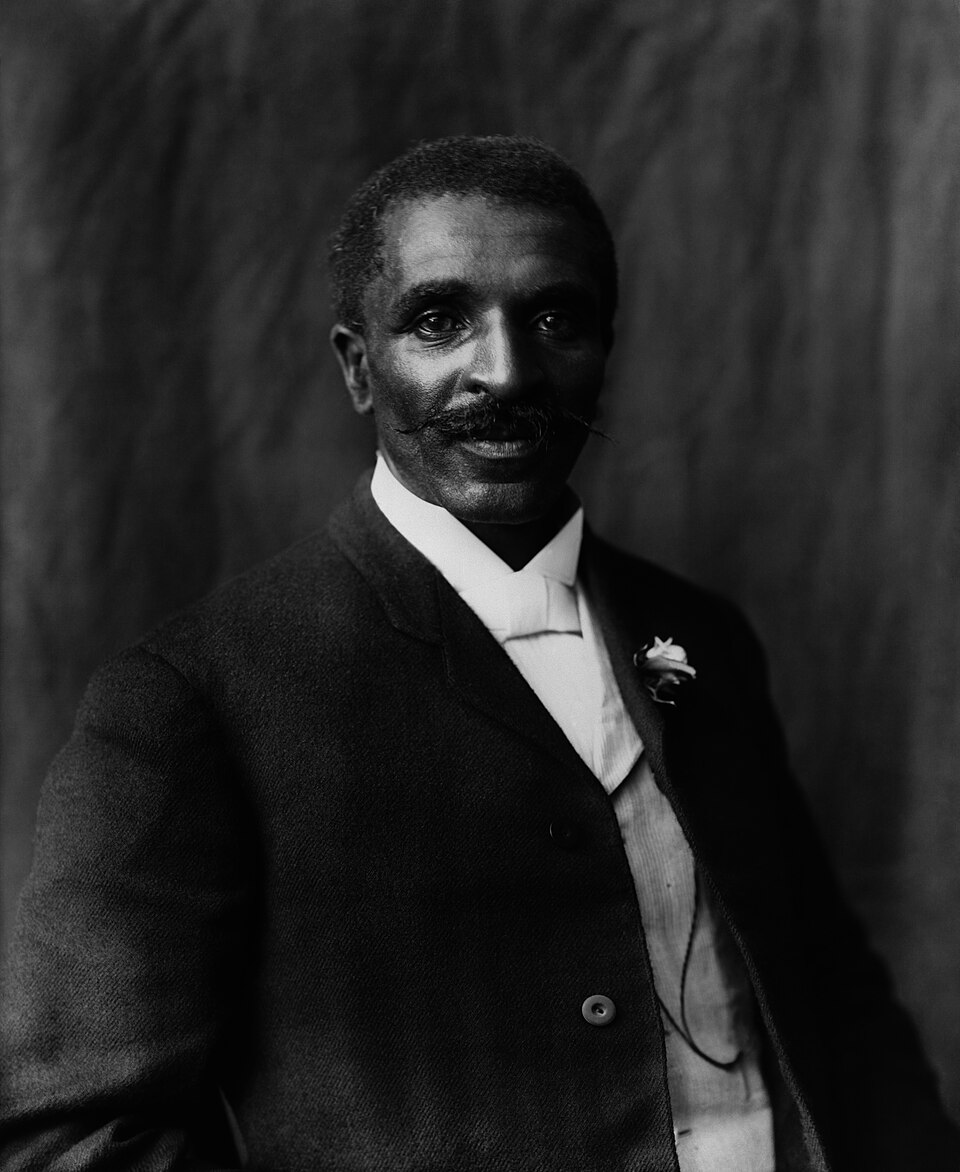
What failed
He was born into slavery and seized as an infant by raiders along with his mother and sister; only he was recovered, near death with whooping cough, and his mother was never returned. The nearest schooling for a Black child was eight miles away and inadequate when he got there. In 1885 he applied to Highland College in Kansas, was accepted, travelled there to enrol, and was turned away because of his race. He homesteaded in Kansas for three years, broke seventeen acres and planted eight hundred trees, and gave it up after repeated drought. At Simpson College he lived roughly a month on beef suet and cornmeal, often without either. Then his art teacher, doubting a Black man could make a living as an artist, steered him out of the career he wanted.
What happened next
He enrolled at Iowa State in 1891 as its first Black student, took a bachelor's degree in 1894 and a master's in 1896, became its first Black faculty member, and left for Tuskegee, where he worked for forty-seven years. In 1921 he testified before a committee of the House of Representatives and got a standing ovation.
The point
The rejection is in his own handwriting, in a letter he wrote in about 1897: he sought to enter Highland College and was refused on account of his colour. Most of the famous rejections in this library are numbers somebody remembered. This one is a document, and it is not about his work at all.
The sequence
5 documented failures, shown with the successes in between. Every entry carries its own source — the wins are part of the record, and leaving them out is how these stories get distorted.
- 1864
Born into slavery. As an infant he is seized by raiders with his mother and sister, and only he is recovered.
- 1877
He walks eight miles to the nearest school that will take him, and finds the teaching poor.
- 1885
A college accepts him by post, then refuses him at the door when they see he is Black.
- 1889
Three years homesteading in Kansas end in drought, and he gives up the claim. A year later he sells the land to pay for school.
- 1890
At college he lives about a month on beef suet and cornmeal, often without either.
- 1891
His art teacher, doubting a Black man can make a living at it, steers him out of art.
- 1896
A master's degree, and then the first Black faculty member at his university.
- 1896
He leaves Iowa for the Tuskegee Institute in Alabama, where he works for forty-seven years.
- 1921
He testifies before a committee of the House of Representatives and gets a standing ovation.
Sources
- History & Culture, George Washington Carver National Monument (National Park Service)
I sought to enter Highland College in k at Highland Kans. Was refused on account of my culor.
- George Washington Carver (National Inventors Hall of Fame)
Describing the many different products derived from peanuts, Carver earned the committee's tariff approval, as well as a standing ovation.
- George Washington Carver (National Inventors Hall of Fame)
However, he was disappointed with the quality of the education he received there, so he decided to move west to Kansas in the late 1870s.
- Mariah Watkins (National Park Service)
About five years later, George Washington Carver walked the eight miles to Neosho to start school.
Use the ← and → keys to move between entries.
Related failures
Others in science & medicine, and nearby.

Katalin Karikó
Biochemistry
Demoted, defunded, pushed out after 24 years. Kept running the experiment.
3 documented failures
Peter Higgs
Theoretical physics
The paper was rejected. Revising it is where the boson came from.
1 documented failure
Albert Einstein
Theoretical physics
He could not get an academic job for two years, and wrote the papers that changed physics as a patent clerk.
8 documented failures

Barry Marshall
Medicine
Nobody believed ulcers were an infection, so he drank the bacteria himself.
4 documented failures