Paul Cézanne
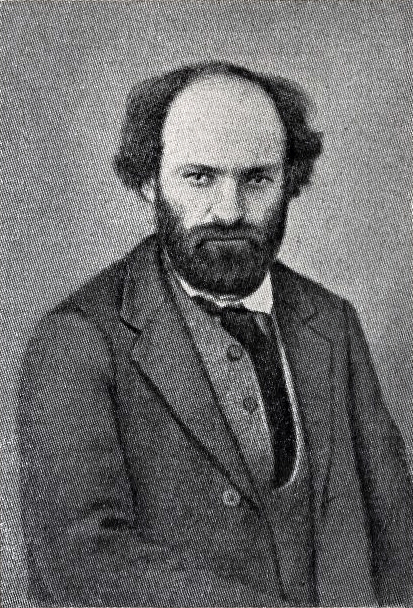
What failed
He enrolled in law at his father's insistence in 1859, left for Paris in April 1861, and was back working in his father's bank by September. He said at the end of his life that he had sat the École des Beaux-Arts entrance competition twice and failed both times; that late remark is the whole of the evidence, and the sources do not agree on which year the attempt belongs to. The Salon refused him every year from 1864 to 1869 and went on refusing him: in April 1866 he wrote twice to the superintendent of fine arts asking for the Salon des Refusés to be restored — the first letter does not survive — and a note in the margin of the second answered that what he wanted was impossible. He showed with the Impressionists in 1874 and 1877 and was laughed at both times; Louis Leroy told readers of Le Charivari to walk a pregnant woman quickly past his portrait of Victor Chocquet. In March 1878 his father found out about Hortense Fiquet and their son and cut the monthly allowance in half, to 100 francs; that May his Salon submission was refused again. One picture was accepted at the Salon, in 1882, and only because a friend on the jury entered it as the work of his pupil — a practice known as "charity" that was not in the exhibition's rules. It was hung where nobody could see it.
What happened next
Ambroise Vollard gave him his first one-man show in Paris in November 1895, when he was fifty-six: about fifty pictures out of the roughly hundred and fifty Vollard had taken. Pissarro, writing on 13 November, called it very complete and said he thought it would be little understood. In October 1897 Hugo von Tschudi, the new director of the Berlin National Gallery, bought a landscape from Durand-Ruel — and is said to have taken it down off the wall when the Emperor came to the museum. The Salon d'Automne gave him a room of his own in 1904, showed ten more paintings in 1905, and hung ten again in 1906 while he was dying. He was still being publicly ridiculed eighteen months before that room: in March 1903 Henri Rochefort described a crowd doubled up with laughter in front of the Cézannes at the Zola sale, and Cézanne wrote to his son that he found copies of the paper under his door every day. He was caught in the rain for hours while painting on 15 October 1906 and died of pneumonia a week later, on 22 October, aged sixty-seven. The Salon d'Automne of October 1907 mounted a retrospective of fifty-six works, seen by Braque, Picasso and Matisse, and it is that show, more than anything in his lifetime, that fixed his reputation.
The point
The record is not two decades of quiet work followed by a reward. It is a man of forty-three getting into the Salon once, by a jury member's favour, into a spot where the picture could not be seen; a man of forty-seven entered in his father's probate declaration as "sans état", of no occupation; a man of sixty-four reading in a Paris daily that people had stood in front of his paintings and laughed. His first solo exhibition opened when he was fifty-six, and his own dealer had to arrange it. The retrospective that settled the argument opened almost a year after he was buried, and even then the Gazette des Beaux-Arts could write that to any eye other than a painter's the walls showed the painful failure of an immense effort. Two things in the usual telling are thinner than they sound. The unbroken twenty-year run of Salon rejections is inferred rather than counted: refusal is documented year by year from 1864 to 1869 and again in particular later years, but what survives is evidence of refusal in specific years, not a register of everything he submitted. And the art-school rejection is not an examination record at all — it rests on what Cézanne said at the end of his life, and the sources disagree even about the year.
The sequence
12 documented failures, shown with the successes in between. Every entry carries its own source — the wins are part of the record, and leaving them out is how these stories get distorted.
- 1859
Enrols in the law faculty at Aix at his father's insistence.
- 1861
Goes to Paris in April and is back working in his father's bank by September. The sources disagree about the art school: Wikipedia dates the École des Beaux-Arts rejection to this year, while the Société Cezanne's chronology places the attempt in the 1862 stay and notes that the only evidence for any of it is what Cézanne said decades later.
- 1862
Returns to Paris in November and enrols again at the Académie Suisse.
- 1862
The art-school rejection is not an examination record. It rests on what Cézanne said at the end of his life — that he had presented himself twice, without success.
- 1863
Refused by the Salon; his paintings hang instead in the first Salon des Refusés.
- 1864–1869
The Salon refuses his submissions every year for six consecutive years.
- 1866
Writes on 19 April to M. de Nieuwerkerke, superintendent of fine arts, asking that the Salon des Refusés be restored. It is his second letter — the first does not survive — and a note in the margin answers that what he asks is impossible.
- 1874
Shows at the first Impressionist exhibition, where Louis Leroy in Le Charivari uses A Modern Olympia to make Manet's Olympia look like a masterpiece of finish by comparison.
- 1874
Count Armand Doria buys The Hanged Man's House out of the same exhibition.
- 1875
Meets Victor Chocquet, who buys three works and becomes his steadiest collector.
- 1877
Shows sixteen catalogued works at the third Impressionist exhibition, and one more that is not in the catalogue.
- 1877
Leroy advises readers not to let a pregnant woman look at his portrait of Chocquet.
- 1877
It is the last time he exhibits with the Impressionists.
- 1877
Georges Rivière defends him in L'Impressionniste, recording in passing how long the abuse has been running.
- 1878
In March his father learns of the long-hidden relationship with Hortense and their son, through a careless letter from Chocquet, and halves the monthly allowance.
- 1878
The allowance is now 100 francs a month. He asks Zola again to send 60 francs to Hortense, who is living with their son in Marseille.
- 1878
In May his Salon submission is refused again.
- 1882
His only Salon acceptance. He enters as a pupil of Antoine Guillemet, one of the forty elected members of the painting jury.
- 1882
The privilege he got in on, a jury member's "charity", was not in the exhibition's rules at all.
- 1882
The accepted portrait is hung so that it cannot be seen, and nobody notices it.
- 1886
Zola publishes L'Œuvre, whose failed painter Claude Lantier is drawn partly from Cézanne. The break is usually dated here and treated as final; the Société Cezanne notes that a later letter from Cézanne to Zola, dated 28 November 1887, has since been found.
- 1886
His father dies on 23 October. In the December probate declaration Paul, then forty-seven, is entered as having no occupation.
- 1895
Vollard opens his first one-man show in Paris — about fifty of the roughly hundred and fifty works Cézanne had sent him. Cézanne is fifty-six and stays in Aix.
- 1895
Pissarro sees it on 13 November and writes that it is very complete, extraordinary in its wildness and character, and that he thinks it will be little understood.
- 1897
On 25 October Hugo von Tschudi, the new director of the Berlin National Gallery, buys a Cézanne landscape from Durand-Ruel. A German museum, not a French one.
- 1897
Tschudi is said to have taken the Cézanne down off the wall when the Emperor visited the museum. The source gives this as a report, not as established fact.
- 1903
After the Zola sale, Henri Rochefort writes in L'Intransigeant that the modern canvases sent the crowd into unmixed hilarity, and that people were doubled up in front of one bearded head.
- 1903
Cézanne, sixty-four, writes to his son that there is no need to send him the article: he finds copies under his door every day, besides the ones posted to him.
- 1904
At the second Salon d'Automne, room IX is given over entirely to him: thirty-one paintings and two drawings, with three panels of Druet photographs of works from Vollard's collection.
- 1905
Ten paintings at the Salon d'Automne, 18 October to 25 November.
- 1906
Ten paintings hang at the fourth Salon d'Automne from 6 October to 15 November — seven of them Vollard's, three Hessel's. He dies partway through the run.
- 1906
Caught in the rain on Monday 15 October while painting above the Lauves studio. His sister Marie writes that he was left out in it for hours, was brought home on a laundryman's cart, and had to be carried up to his bed by two men.
- 1906
Dies of pneumonia at Aix-en-Provence on 22 October, aged sixty-seven, and is buried in his home town.
- 1907
The Salon d'Automne mounts a retrospective of fifty-six works, eleven months after his death.
Sources
- Paul Cézanne (Wikipedia) — the six documented years of Salon refusal
The Salon de Paris rejected Cézanne's submissions every year from 1864 to 1869.
- 1862 — Chronologie — Société Cezanne (the École rejection rests on his own late account)
À la fin de sa vie, Cezanne dira qu’il s’est présenté deux fois sans succès au concours d’entrée de l’École des beaux-arts.
- 1866 — Chronologie — Société Cezanne (the note in the margin)
En marge de la lettre figure cette note laconique : « Ce qu’il demande est impossible, on a reconnu tout ce que l’exposition des refusés [en 1863] avait de peu convenable pour la dignité de l’Art et elle ne sera pas rétablie ; rép. le 28 avril.
- 1874 — Chronologie — Société Cezanne (Louis Leroy in Le Charivari)
Eh bien, c’était un chef-d’œuvre de dessin, de correction, de fini, comparée à celle de M. Cezanne
- 1877 — Chronologie — Société Cezanne (Georges Rivière on how long the abuse had run)
L’artiste le plus attaqué, le plus maltraité depuis quinze ans par la presse et par le public, c’est M. Cezanne.
- 1878 — Chronologie — Société Cezanne (the allowance cut to 100 francs)
Son père ayant décidé de ne plus lui allouer que 100 francs de pension, Cezanne confirme à Zola sa demande d’envoi de 60 francs à Hortense
- 1882 — Chronologie — Société Cezanne (the one accepted picture, hung out of sight)
personne ne remarqua le portrait, de petite dimension certainement, que, par ordre sans doute, les commissaires de l’exposition placèrent de telle manière qu’aucun regard ne pouvait le découvrir.
- 1886 — Chronologie — Société Cezanne (his father's probate declaration)
Paul Cezanne est mentionné « sans état ».
- 1895 — Chronologie — Société Cezanne (Pissarro on the Vollard show)
Chez Vollard il y a une exposition de Cezanne très complète. Des natures mortes d’un fini étonnant, des choses inachevées, mais vraiment extraordinaires de sauvagerie et de caractère, je crois que ce sera peu compris.
- 1897 — Chronologie — Société Cezanne (Berlin buys a landscape)
Hugo von Tschudi, le nouveau directeur de la Galerie nationale de Berlin, achète chez Durand-Ruel un Paysage de Cezanne
- 1903 — Chronologie — Société Cezanne (Rochefort on the crowd at the Zola sale)
les toiles modernes qu’il avait mêlées à ces fonds de magasin provoquaient dans la foule une hilarité sans mélange.
- 1903 — Chronologie — Société Cezanne (Cézanne to his son, on finding the paper under his door)
Inutile de me l’envoyer, chaque jour j’en trouve sous ma porte, sans compter les numéros de l’Intransigeant qu’on m’adresse par la poste.
- André Pératé et le 5e Salon d’automne de 1907 — Société Cezanne (the Gazette des Beaux-Arts on the retrospective)
Pour tout autre œil que d’un peintre, l’échec douloureux d’un immense effort se trahit à ces murs où, religieusement, on a disposé peintures et aquarelles, œuvres achevées ou esquisses et barbouillages.
- Salon d'Automne (Wikipedia) — the 1907 retrospective
and a Paul Cézanne retrospective exhibition which included 56 works as a tribute to the painter who died in 1906.
Use the ← and → keys to move between entries.
Related failures
Others in visual art, and nearby.
Claude Monet
Painter
Rejected by the Salon in three years out of four, evicted for unpaid rent, and his paintings seized by creditors.
7 documented failures
Yayoi Kusama
Artist
Turned up uninvited at the Venice Biennale in 1966 and had her sale stopped by the organisers. Represented Japan there twenty-seven years later.
7 documented failures
Grandma Moses
Painter
Her paintings sat unsold in a chemist's window for years. She was seventy-eight.
6 documented failures
Charles M. Schulz
Cartooning
His own school yearbook would not print his drawings. He called it his first major rejection.
6 documented failures